
Chicken alfredo easy is really about two things: getting tender chicken and a creamy sauce that doesn’t turn grainy, all without turning dinner into a project. This recipe keeps the ingredient list simple, but it still tastes like you meant it.
If you’ve ever ended up with a sauce that breaks, clumps, or coats the pasta like glue five minutes later, you’re not alone. Alfredo is forgiving in flavor, not always in technique, especially when heat gets too high or the pasta water gets ignored.
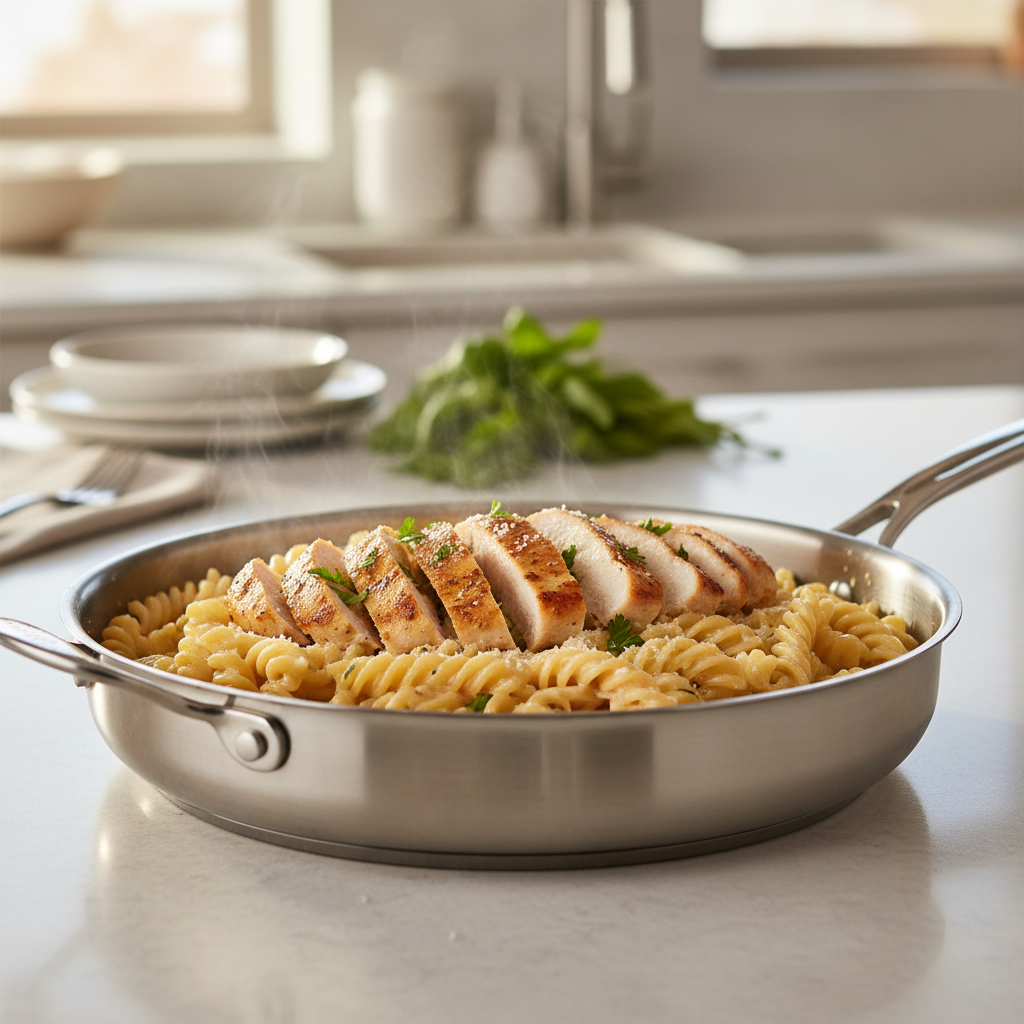
Below you’ll get a reliable method, a few “choose-your-own” options depending on your fridge, and quick fixes for the most common Alfredo problems. There’s also a timing plan so everything hits the table hot.
What makes “easy” chicken Alfredo actually work
Most “easy” recipes skip the parts that make Alfredo stable. The trick is keeping the process short and using a couple of small guardrails.
- Moderate heat: Alfredo sauce usually breaks when dairy gets too hot too fast.
- Starch matters: a splash of reserved pasta water helps the sauce emulsify and cling.
- Grate your own Parmesan if possible: pre-shredded cheese often has anti-caking agents that can make sauce gritty.
- Season in layers: bland Alfredo often comes from seasoning only at the end.
According to USDA Food Safety and Inspection Service (FSIS), chicken should reach 165°F internal temperature for safety. A quick-read thermometer keeps “easy” from turning into “dry.”
Ingredients and smart swaps (so you don’t need a special trip)
This version aims for classic comfort without a long grocery list. If you want chicken alfredo easy on a weeknight, swaps are part of the plan.
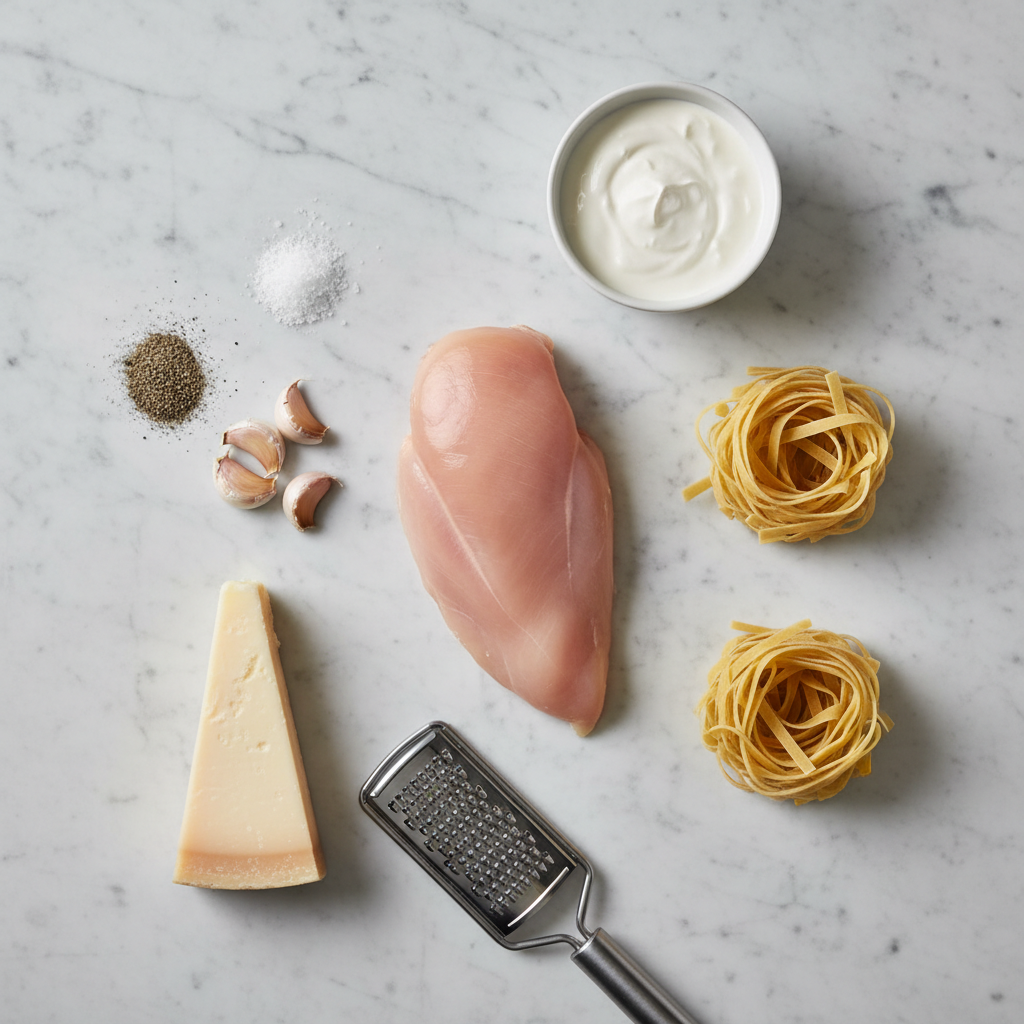
Core ingredients
- Pasta: fettuccine is classic, but penne or linguine works.
- Chicken: boneless skinless breasts or thighs.
- Butter and heavy cream (or a cream blend, see swaps below).
- Parmesan: finely grated.
- Garlic: 2–4 cloves, depending on your mood.
- Salt, black pepper, optional pinch of nutmeg.
Easy swaps (use what fits your pantry)
- No heavy cream: half-and-half can work, but keep heat lower and expect a slightly thinner sauce.
- Need more “restaurant” body: add 2–3 oz cream cheese, whisked in (not traditional, but very forgiving).
- Rotisserie shortcut: shred and warm in the sauce near the end.
- Add vegetables: broccoli florets, peas, spinach, or sautéed mushrooms.
Step-by-step: chicken Alfredo easy method (30–40 minutes)
This is the version I’d hand to someone who wants a smooth sauce without babysitting it.
1) Cook pasta and reserve the “gold”
- Boil salted water, cook pasta until just al dente.
- Reserve 1 cup pasta water, then drain.
2) Cook chicken so it stays juicy
- Slice chicken into cutlets (or bite-size pieces) for faster, more even cooking.
- Season with salt and pepper.
- Sear in a skillet with a little oil and butter until browned and cooked through (target 165°F).
- Move chicken to a plate, tent loosely with foil.
3) Build the sauce (low stress, low heat)
- Lower heat to medium-low, add butter and garlic, cook just until fragrant.
- Pour in heavy cream, gently simmer 2–4 minutes, don’t let it rage-boil.
- Whisk in Parmesan in small handfuls until smooth.
- Add black pepper, taste for salt.
4) Combine and adjust texture
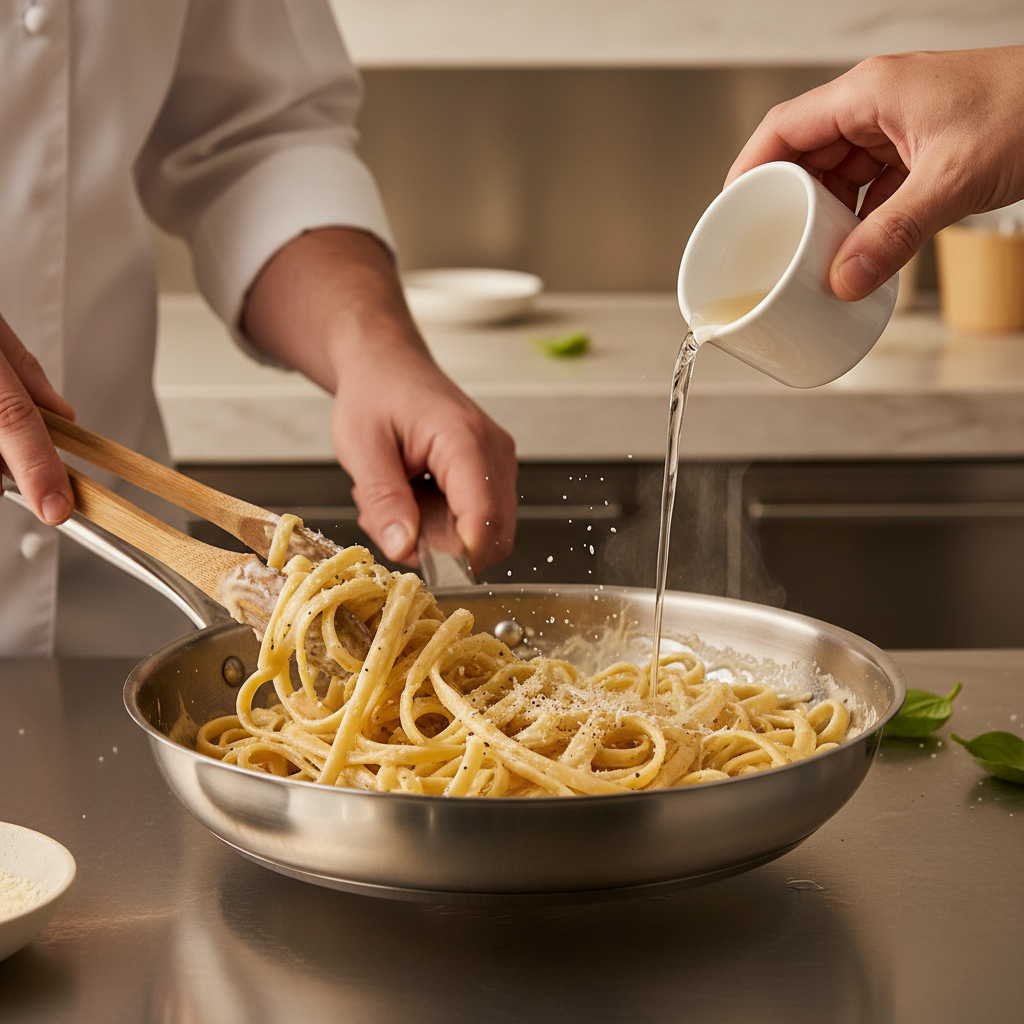
- Add pasta, toss to coat.
- Add chicken back in.
- If it looks tight, add reserved pasta water a splash at a time until glossy and creamy.
At this point, you’ve got chicken alfredo easy that behaves well on the plate, not just in the pan.
Quick timing plan (so nothing sits around)
Alfredo waits for no one, and that’s usually when it thickens too much. Here’s an efficient rhythm.
| Minute | What you do | Why it helps |
|---|---|---|
| 0–5 | Start pasta water, prep chicken and garlic | Everything moves fast after the chicken hits the pan |
| 6–18 | Cook pasta, sear chicken | Parallel cooking keeps total time down |
| 19–28 | Make Alfredo sauce on medium-low | Lower heat reduces splitting risk |
| 29–35 | Toss pasta + chicken, adjust with pasta water | Starch gives that “coats every noodle” finish |
Self-check: which Alfredo problem are you about to have?
Most issues show up in the pan before you taste them. Use this quick checklist while you cook.
- Sauce looks grainy: heat too high, or cheese added too fast, or pre-shredded Parmesan.
- Sauce looks oily: it started to separate, often from boiling.
- Sauce too thick: pasta sat too long, or not enough pasta water.
- Sauce too thin: not enough cheese, or cream didn’t reduce slightly.
- Chicken tastes dry: cooked too long, or pieces too thick/uneven.
Fixes and upgrades (without “starting over”)
This is the part people wish recipes included. When chicken alfredo easy goes sideways, it’s usually salvageable.
If the sauce breaks or turns grainy
- Pull the pan off heat, let it cool 1–2 minutes.
- Whisk in 1–3 tbsp warm pasta water to bring it back together.
- If it’s still rough, whisk in a small splash of warm cream, then add cheese more slowly.
If the sauce is too thick after tossing
- Add reserved pasta water a tablespoon at a time while tossing.
- Keep heat low; high heat tightens the sauce fast.
If it tastes flat
- Add a pinch more salt, then wait 20 seconds and taste again.
- More black pepper helps more than people expect.
- A tiny pinch of nutmeg can make it taste “warmer,” but don’t overdo it.
Easy upgrades that still feel weeknight-friendly
- Lemon zest: brightens the whole bowl without making it “lemon pasta.”
- Broccoli: drop florets into pasta water for the last 2–3 minutes.
- Crispy topping: toast panko with butter and sprinkle on top.
Common mistakes (and what to do instead)
A few habits make Alfredo harder than it needs to be.
- Boiling the cream: aim for a gentle simmer, not a rolling boil.
- Adding cheese over high heat: lower the heat before Parmesan goes in.
- Skipping pasta water: it’s not “watery,” it’s your emulsifier.
- Overcooking pasta: it keeps softening in the hot sauce.
- Cutting chicken after cooking without resting: give it a couple minutes so juices don’t run out immediately.
Storage, reheating, and food-safety notes
Alfredo is best fresh, but leftovers can still be good if you reheat gently.
- Storage: refrigerate in a sealed container, and use within a few days (timing can vary by fridge temperature and handling).
- Reheat: low heat in a skillet with a splash of water or milk, stir slowly until creamy again.
- Microwave method: short bursts, stirring between, to reduce separation.
According to USDA Food Safety and Inspection Service (FSIS), perishable foods should not sit at room temperature for more than about 2 hours (less in hotter environments). If you’re serving buffet-style, keep it hot or portion smaller batches.
Key takeaways (bookmark these)
- Low heat keeps Alfredo smooth.
- Reserved pasta water turns “okay sauce” into glossy sauce.
- Even chicken pieces cook fast and stay juicy.
- Grated Parmesan melts cleaner than many bagged shreds.
If you want chicken alfredo easy to become a repeat, focus on the sauce temperature and the pasta water, those two choices fix most of the “why doesn’t mine look like the photo” moments.
Conclusion: a realistic path to weeknight Alfredo
Good Alfredo isn’t complicated, it’s just a little sensitive to heat and timing. Keep the simmer gentle, save the pasta water, and don’t chase thickness by cranking the burner.
Next time you make it, try one small upgrade instead of five, maybe broccoli in the pasta pot or lemon zest at the end, then adjust from there based on what your household actually likes.
FAQ
How do I make chicken Alfredo easy without heavy cream?
You can use half-and-half, but keep the heat low and expect a lighter sauce. If you want a more forgiving texture, a small amount of cream cheese can help it stay cohesive.
Why does my Alfredo sauce get gritty?
Usually the heat was too high when the cheese went in, or the cheese was added too quickly. Pre-shredded Parmesan can also melt less smoothly because of anti-caking agents.
Can I use pre-cooked or rotisserie chicken?
Yes, and it’s a legit shortcut. Add it at the end just to warm through, since prolonged simmering can dry it out.
What pasta works best for Alfredo besides fettuccine?
Penne and linguine are reliable. In many kitchens, the “best” option is whatever shape you can toss quickly and coat evenly, especially if you’re feeding kids.
How do I keep Alfredo from getting too thick on the table?
Serve promptly and keep a little reserved pasta water nearby. A small splash stirred in right before serving usually brings back the silky texture.
Is it safe to reheat chicken Alfredo?
In many cases yes, if it was cooled and stored promptly and reheated thoroughly. If you’re unsure about storage time or temperature, it’s safer to discard and remake.
Can I add vegetables without making the sauce watery?
Yes, just manage moisture. Blanch broccoli in the pasta water, sauté mushrooms until their liquid cooks off, and stir spinach in at the very end.
If you’re trying to get chicken alfredo easy into your regular rotation, keep a short “pantry plan” on hand: pasta, Parmesan, garlic, and either cream or a workable substitute, then dinner becomes more of a quick assembly than a big decision.