
Best air fryer recipes for beginners usually come down to two things: forgiving foods and repeatable timing, so you can stop guessing and start getting crisp, juicy results on a normal weeknight.
If you bought an air fryer and now it mostly sits on the counter, you’re not alone, the early frustration is real, uneven browning, dry chicken, or vegetables that go from pale to burnt fast. The upside is that once you learn a few “base” recipes, you can remix them into dozens of meals without relearning the machine every time.
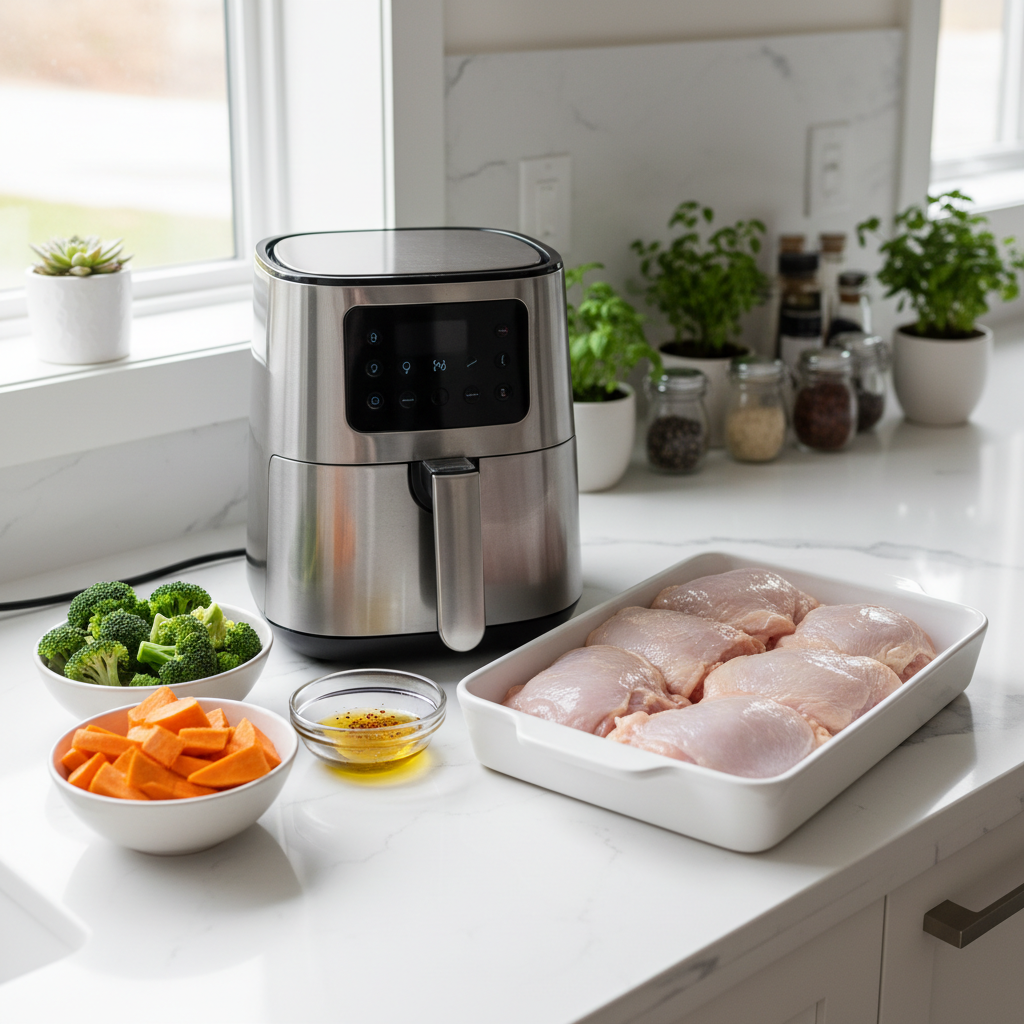
This guide keeps it practical: a quick “don’t mess this up” checklist, a table of starter recipes with times and temps, and a simple workflow that makes your air fryer feel predictable. No fancy gadgets required, just the stuff most U.S. kitchens already have.
What makes a recipe “beginner-proof” in an air fryer
Air fryers cook fast because hot air moves aggressively around a small chamber. That’s great for crisping, but it also punishes thin foods and inconsistent sizing.
- Even size wins: cut pieces to similar thickness so one batch finishes together.
- Some fat helps: a light coat of oil improves browning and reduces dry patches.
- Room for airflow: crowded baskets steam, so crisp turns soggy.
- Clear doneness signal: recipes that rely on internal temp (chicken, salmon) or obvious texture (fries) are easier to master.
According to USDA Food Safety and Inspection Service, poultry should reach a safe internal temperature; if you cook chicken often, a basic instant-read thermometer removes a lot of stress.
Quick self-check: why your air fryer results might be disappointing
Before you blame the recipe, run through this list, most “bad batches” trace back to one or two habits.
- Overcrowding: food stacked or touching heavily, leading to steaming.
- No preheat when needed: many models don’t require it, but for crisp skin or fries, a short preheat often helps.
- Wrong temp for the job: too hot dries lean proteins, too cool makes breading soft.
- Skipping the shake/flip: halfway movement evens color, especially with small pieces.
- Wet surfaces: moisture blocks browning, pat proteins and vegetables dry.
- Seasoning timing: sugary sauces burn early, add at the end or dilute.
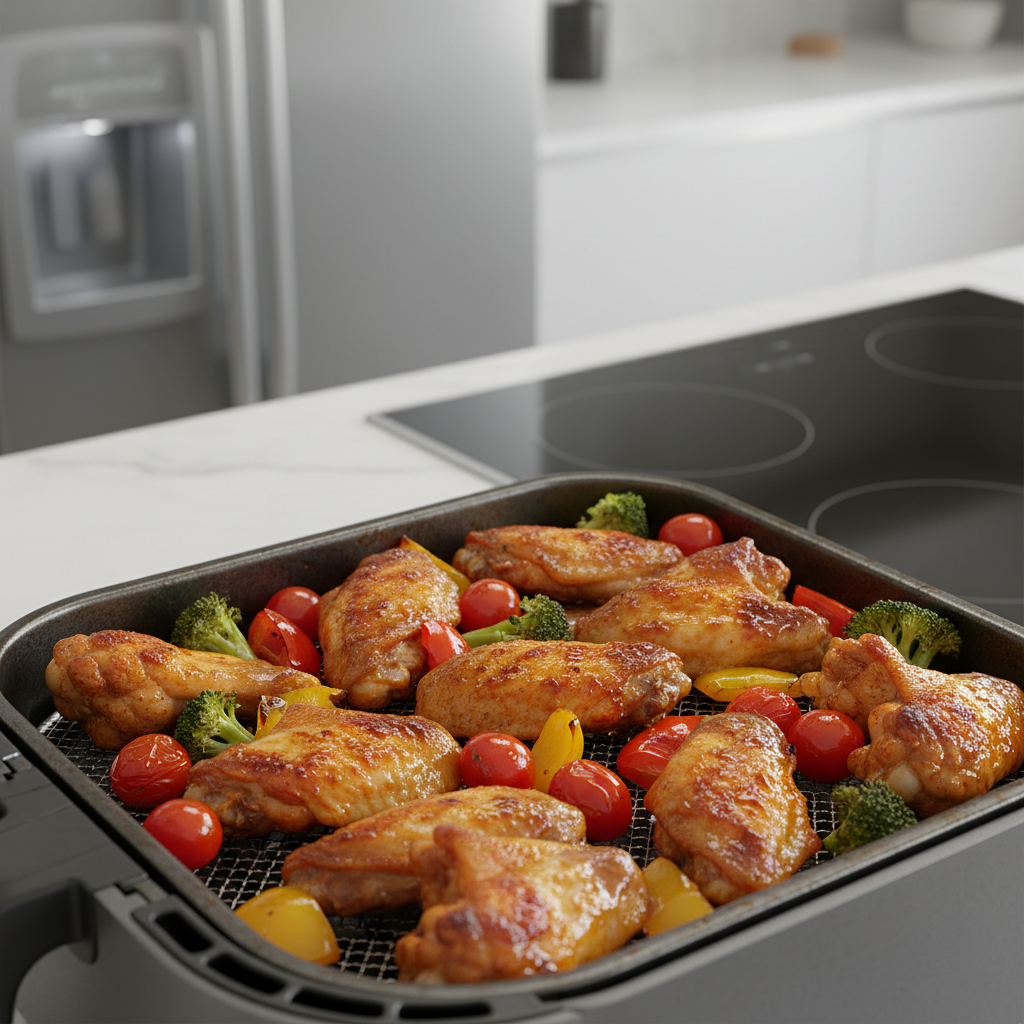
If you’re doing most of these right and food still cooks unevenly, it can be your specific model’s hot spots, many baskets brown more on one side, so rotating the basket midway is a simple fix.
Starter recipe table: reliable times, temps, and what to watch for
These are “base recipes” you can reuse, the exact time varies by air fryer size, basket fullness, and food thickness, so treat the minutes as a starting point and use visual cues or a thermometer when appropriate.
| Beginner recipe | Temp | Time | Shake/flip | Key cue |
|---|---|---|---|---|
| Crispy frozen French fries | 380–400°F | 12–18 min | Shake 2x | Deep golden edges, dry surface |
| Chicken thighs (boneless) | 380°F | 14–20 min | Flip once | Juices run clear, safe internal temp |
| Salmon fillet | 390°F | 7–12 min | Optional | Flakes easily, still moist inside |
| Broccoli florets | 375°F | 8–12 min | Shake once | Charred tips, tender stems |
| Sweet potato wedges | 380°F | 14–22 min | Shake 2x | Browned corners, soft center |
| Reheated pizza slices | 325–350°F | 3–6 min | No | Bottom crisp, cheese just bubbling |
6 best air fryer recipes for beginners (with easy variations)
Each recipe below is meant to be low-drama. If you’re building confidence, repeat one recipe a few times before adding more variables.
1) Crispy frozen fries that don’t taste dry
Skip extra oil at first, most frozen fries already have enough. Cook at 380–400°F, shake at minute 6 and minute 12, and stop when they look a shade darker than you think you want, they soften slightly as they cool.
- Variation: toss hot fries with Old Bay, Cajun seasoning, or garlic powder plus salt.
- Common miss: piling the basket high, if they overlap heavily, cook in two rounds.
2) Juicy chicken thighs with a “base rub”
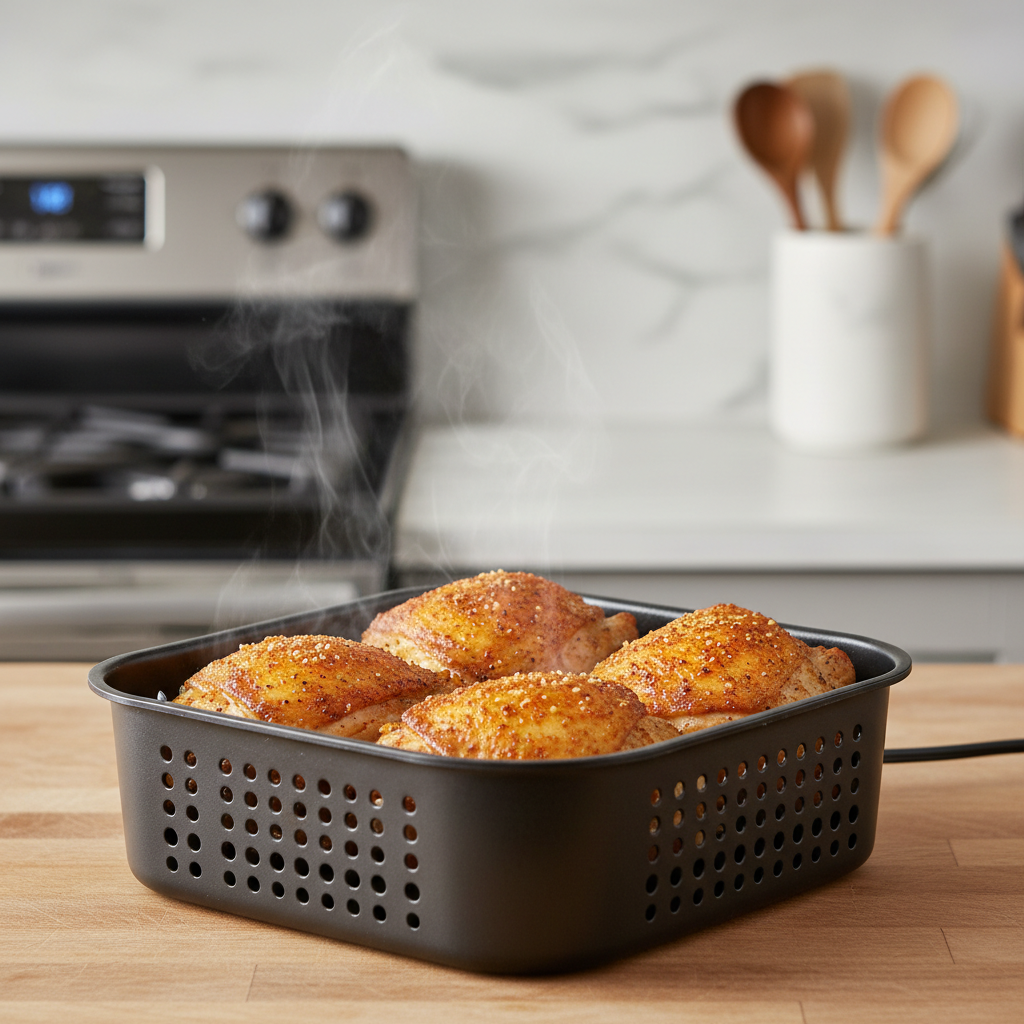
Chicken thighs are forgiving, which is why they show up in many lists of best air fryer recipes for beginners. Pat dry, coat lightly with oil, add salt, pepper, paprika, and a little garlic powder, cook at 380°F and flip halfway.
- Variation: add lemon pepper at the end, or brush with BBQ sauce in the last 2–3 minutes to reduce burning.
- Key point: thickness drives time, if one thigh is much larger, pull smaller pieces earlier.
3) Salmon with crisp edges and a moist center
Choose center-cut fillets if possible, they cook more evenly. Lightly oil, season with salt and pepper, cook around 390°F. Start checking early because salmon goes from perfect to dry fast.
- Variation: add a thin layer of Dijon plus honey after cooking, residual heat sets the glaze without scorching.
- Safety note: if you have dietary or health concerns, cooking doneness preferences vary, consider professional guidance.
4) Broccoli that tastes roasted, not steamed
Dry broccoli well, then toss with a teaspoon or two of oil, salt, and pepper. Cook at 375°F, shake once. If you like deeper browning, add 1–2 extra minutes, but watch the smallest florets.
- Variation: finish with Parmesan or a squeeze of lemon.
- Common miss: adding too much oil, it can drip and smoke in some models.
5) Sweet potato wedges with simple crisping tricks
Cut into consistent wedges, soak in cold water 10–20 minutes if you have time, then dry thoroughly. Toss with oil, salt, paprika, cook at 380°F and shake twice.
- Variation: cinnamon plus a tiny pinch of salt for a sweet-leaning version, add after cooking.
- Key point: wet surfaces sabotage crisp, drying matters more than extra heat.
6) “Better than microwave” reheat: pizza or leftover fried food
This is the quiet superpower. Lower temp, short time, and you get crisp without turning cheese into rubber. Use 325–350°F and check early.
- Variation: cover very cheesy slices loosely with foil for the first 2 minutes, then uncover to crisp.
A simple workflow to cook without guesswork
If you want your air fryer to feel predictable, use the same routine each time, it’s boring in a good way.
- Prep: dry the surface, oil lightly, season evenly.
- Load: one layer with gaps, cook in batches if needed.
- Midway check: shake or flip, rotate basket if your model browns unevenly.
- Finish smart: rest 2–3 minutes, crisp improves as steam escapes.
- Record: note your model, temp, and the “perfect minute” in your phone.
Once you have two or three winners, meal planning gets easier, one protein plus one vegetable becomes a repeatable template, and that’s where beginners usually start feeling confident.
Common mistakes (and how to avoid them)
- Using aerosol nonstick sprays: some basket coatings can degrade over time, many manufacturers recommend brushing oil instead, check your manual.
- Adding sauce too early: sugary glazes can burn, add in the last few minutes.
- Ignoring smoke: fatty foods may drip and smoke, add a little water to the drawer (if your model allows) or reduce temp, and clean buildup.
- Overcooking lean meat: chicken breast and pork loin dry quickly, start with thighs, salmon, or breaded items.
- Skipping cleaning: old grease affects flavor and can trigger smoke, a quick wash after cooling saves future headaches.
According to U.S. Consumer Product Safety Commission, small kitchen appliances should be used with care around heat sources and cords, keep airflow clear and follow the unit’s safety instructions.
Practical next steps: a 7-day beginner plan
If you’re trying to build momentum, don’t chase variety, chase repetition with small changes.
- Day 1: frozen fries, learn shaking and browning.
- Day 2: broccoli, learn oil amount and char level.
- Day 3: chicken thighs, learn flipping and resting.
- Day 4: reheat leftovers, learn low-temp control.
- Day 5: sweet potato wedges, learn dryness and spacing.
- Day 6: salmon, learn early checking and doneness.
- Day 7: repeat your favorite and tweak one variable only.
Conclusion: pick two “base recipes” and repeat until they feel automatic
The fastest path to the best air fryer recipes for beginners is not hunting for 50 new ideas, it’s choosing two proteins and two sides that behave well, then dialing in your model’s timing. Keep the basket uncrowded, dry surfaces, and check earlier than you think.
Tonight, pick one recipe from the table, cook it once, then write down what you’d change next time, one small note turns your air fryer into a tool you can actually rely on.
Key takeaways
- Airflow matters more than most beginners expect, avoid crowding.
- Dry food browns, wet food steams, pat ingredients before cooking.
- Thermometers reduce guesswork for chicken and other proteins.
- Repeat a few winners before expanding your recipe list.
FAQ
- What are the easiest foods to start with in an air fryer?
Frozen fries, chicken thighs, and sturdy vegetables like broccoli tend to be forgiving, they show clear browning cues and tolerate small timing errors. - Do I really need to preheat an air fryer?
Many models work fine without preheating, but a short preheat often helps when you want crisp skin or fast browning, test it once and compare. - Why is my food not getting crispy?
Most of the time it’s crowding or moisture. Try cooking in a single layer, pat food dry, and use a light oil coat rather than none or too much. - How do I prevent seasoning from burning?
If your rub contains sugar or sweet sauces, add them near the end. For dry spices, keep temps moderate and avoid excessive time. - Can I use parchment paper or foil in the basket?
Usually yes in many cases, but it must not block airflow and it should be weighed down by food. Check your manufacturer guidance to avoid safety issues. - How do I know chicken is cooked safely?
Visual cues help, but a thermometer gives the cleanest answer. According to USDA Food Safety and Inspection Service, poultry should reach a safe internal temperature. - What size air fryer works best for beginners?
Bigger baskets make it easier to keep food in one layer, but countertop space matters. If you frequently cook for 2–4 people, a mid-to-large capacity often feels less cramped.
If you’re trying to build a small rotation of weeknight meals and want a more “plug-and-play” approach, keep a short list of base recipes plus your preferred temps in a notes app, it’s a simple system that makes your air fryer feel consistent without overthinking it.