
The best naan recipe homemade soft usually comes down to three things most home cooks underestimate: hydration, heat, and timing. If your naan keeps turning tough, dry, or bready, it’s rarely because you “can’t bake” and more often because the dough didn’t develop the right structure, or the pan wasn’t hot enough.
Naan looks simple, flour plus yogurt plus a quick cook, but small choices change the texture fast. A little too much flour while shaping, a lukewarm skillet, or overcooking by 30 seconds can turn “pillowy” into “flat and stiff.”
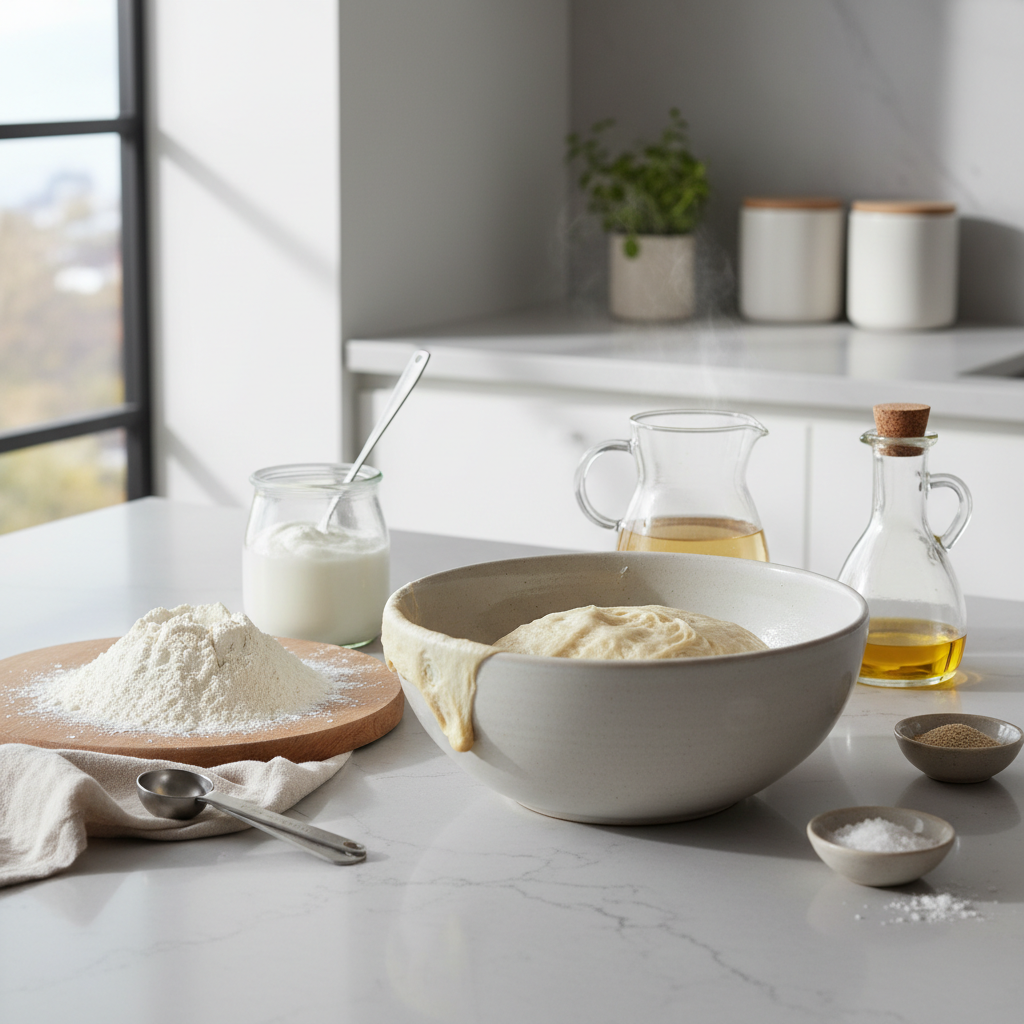
This guide focuses on practical cues you can see and feel, not just a list of ingredients. You’ll get a reliable base recipe, a quick troubleshooting map, and a few small upgrades that make homemade naan taste closer to restaurant-style.
What “soft naan” actually means in a home kitchen
Soft naan isn’t the same as “underbaked” or “thin like a tortilla.” Good naan typically has a tender interior, a slightly chewy pull, and blistered spots from high heat.
- Tender: enough moisture and fat (often yogurt + oil) to keep the crumb plush.
- Chewy: gluten developed through kneading and resting.
- Blistered: pan or oven hot enough to char spots quickly without drying the bread.
According to USDA, yeast is a living organism and works best within a warm range; in practical terms, if your kitchen is cool, your rise will slow and texture can suffer because the dough never relaxes fully.
Ingredients that make the difference (and what you can swap)
Most “soft” results come from a dough that’s slightly tacky, not flour-dry. Here are the ingredients that tend to matter most, plus realistic swaps for American kitchens.
Core ingredients
- All-purpose flour: reliable, tender. Bread flour adds chew but can skew tougher if over-floured during shaping.
- Plain yogurt: adds acidity and tenderness. Greek yogurt works, but thin with a splash of water if it’s very thick.
- Yeast: instant or active dry both work; rise time shifts slightly.
- Oil or melted butter: helps softness and keeps the surface from drying.
Common swaps (when you’re missing something)
- No yogurt: use buttermilk or sour cream thinned with water.
- No yeast: you can do baking powder “naan-style flatbread,” but it won’t mimic the same chew.
- Dairy-free: unsweetened plant yogurt can work, but results vary by brand and thickness.
Best soft homemade naan recipe (skillet method)
This version is built for a cast-iron skillet or heavy stainless pan, which is how many people get the closest home approximation to a tandoor effect.
Ingredients (makes 8 naan)
- 3 1/2 cups (420g) all-purpose flour, plus a little for handling
- 2 1/4 tsp instant yeast (or active dry yeast)
- 2 tsp sugar or honey
- 1 1/2 tsp kosher salt
- 3/4 cup (180g) plain yogurt
- 3/4 cup (180ml) warm water, plus 1–2 tbsp as needed
- 2 tbsp olive oil (or neutral oil), plus a little for the bowl
- 2 tbsp melted butter for brushing (optional but worth it)
Method (what to look for, not just what to do)
1) Mix: In a large bowl, combine flour, yeast, sugar, and salt. Add yogurt, warm water, and oil. Stir until shaggy.
2) Knead: Knead 6–8 minutes by hand (or 4–5 minutes in a mixer). The dough should feel soft and slightly tacky. If it feels stiff, add water 1 tbsp at a time.
3) First rise: Lightly oil the bowl, cover, and let rise until puffy and roughly doubled, often 60–90 minutes depending on room temp.
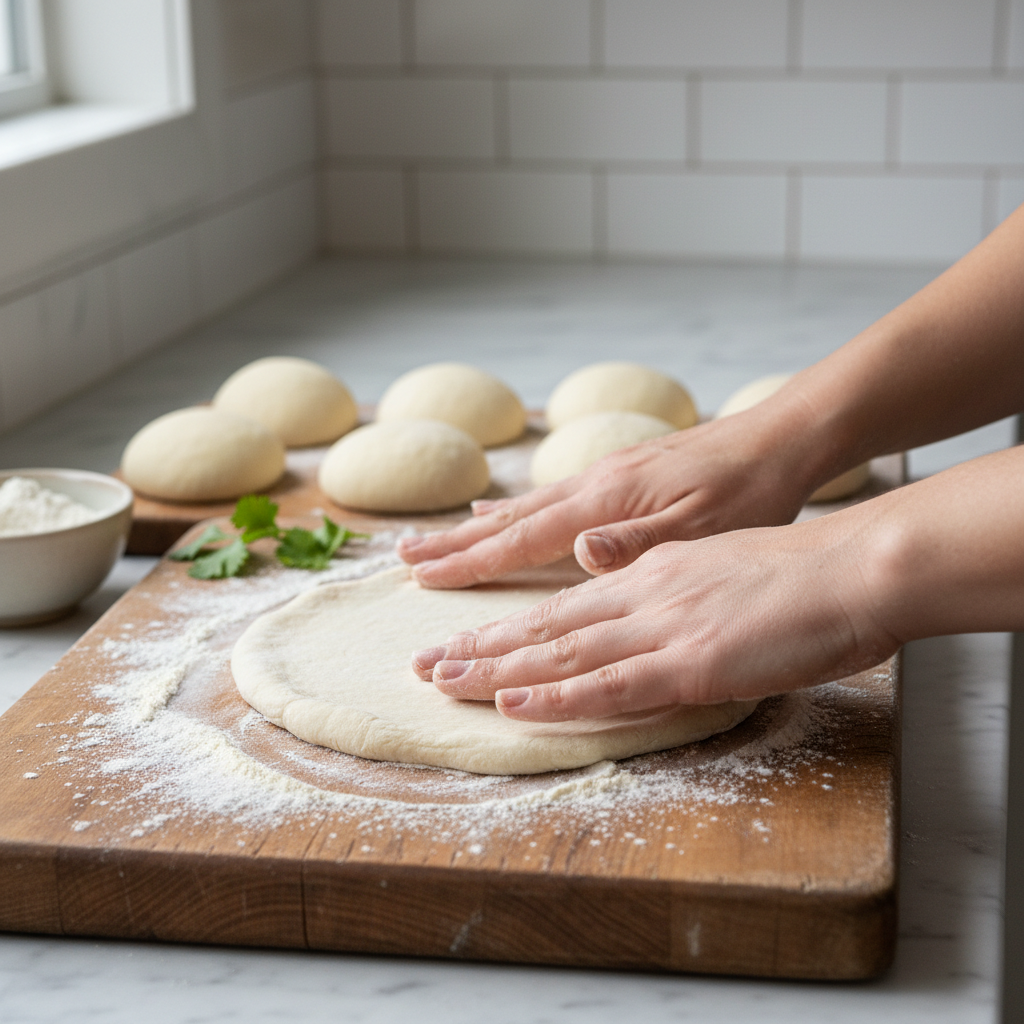
4) Portion: Divide into 8 pieces. Shape into balls, cover, and rest 10–15 minutes so the dough relaxes.
5) Shape: On a lightly floured surface, stretch each ball into an oval about 1/8–1/4 inch thick. Use less flour than you think; excess flour can dry the surface and dull blistering.
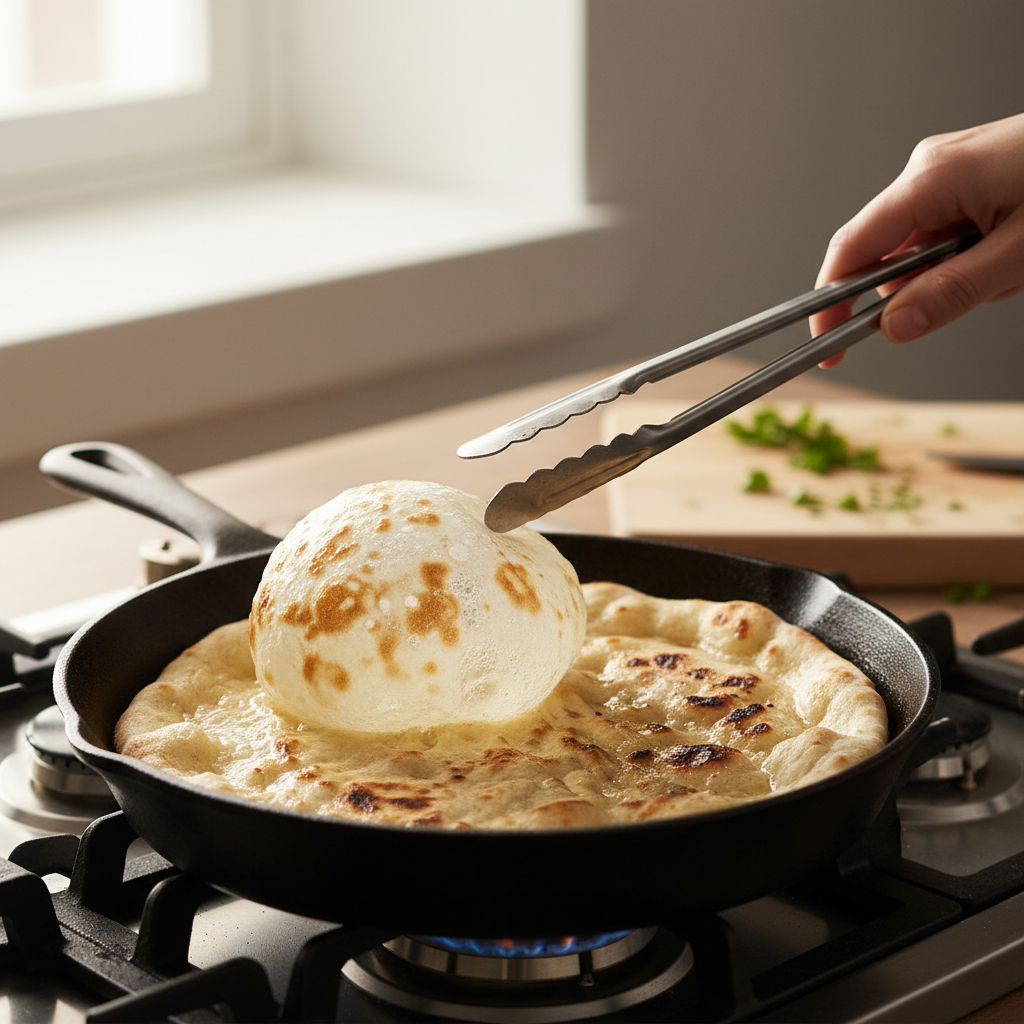
6) Cook: Heat a dry cast-iron skillet over medium-high until very hot. Cook one naan 45–75 seconds on the first side until bubbles and char spots appear, flip and cook 30–60 seconds. Adjust heat so it blisters fast without burning.
7) Finish: Stack cooked naan in a towel-lined bowl to trap steam. Brush with melted butter, and add garlic or cilantro if you want.
Timing and temperature: the part that decides “soft” vs “tough”
If you only change one thing, change this: cook hotter and shorter. A pan that’s merely “warm” forces you to cook longer, and longer cook time dries bread out.
- Preheat longer than feels necessary: cast iron often needs several minutes to stabilize.
- Watch the bubbles: if no bubbles appear in 30–40 seconds, the pan may be too cool or the dough too thick.
- Use a towel stack: stacking traps steam and keeps each piece flexible.
According to FDA, proper handwashing and clean surfaces reduce cross-contamination risk; with dough work, that mainly means clean counters and avoiding raw flour mess on ready-to-eat foods, since flour is not a ready-to-eat product.
Quick self-check: why your naan isn’t soft yet
If your results feel inconsistent, you’re not alone. Use this as a fast diagnosis before you change the whole recipe.
- Naan feels dense: rise likely short, yeast may be old, or dough too dry.
- Naan turns hard as it cools: overcooked, pan too cool, or not stacked/covered after cooking.
- No blistering: pan not hot enough, too much flour on surface, or dough rolled too thick.
- Tears while shaping: dough didn’t rest enough, gluten too tight.
- Sticky and unmanageable: normal to be tacky, but if it’s wet-glue sticky, add a little flour and oil your hands instead of dusting heavily.
Useful variations (garlic butter, whole wheat, and make-ahead)
This is where you can customize without losing the soft texture. Keep the base dough the same and tweak gently.
Garlic butter naan
- Mix 2 tbsp melted butter with 1 small grated garlic clove and a pinch of salt.
- Brush immediately after cooking, then sprinkle chopped cilantro.
Whole wheat naan (more flavor, a bit less fluffy)
- Swap in 25–40% whole wheat flour.
- Add 1–2 tbsp extra water if the dough tightens.
Make-ahead and reheat
- Same day: keep wrapped in a towel, then sealed in a bag once cool.
- Freeze: freeze with parchment between pieces; reheat in a hot skillet 30–60 seconds per side.
- Microwave: workable in a pinch, but tends to soften without blistering; finish 10–15 seconds in a hot pan if you can.
Troubleshooting table: fix the texture without guessing
If you’re aiming for the best naan recipe homemade soft experience, small corrections beat adding random extra flour or extra yeast.
| Problem | Likely cause | What to do next batch |
|---|---|---|
| Dry, cracker-like edges | Overcooked or pan too cool | Preheat more, cook hotter/shorter, stack in towel |
| Heavy, bread-like crumb | Dough too dry or under-proofed | Add a bit more water, give a longer warm rise |
| No bubbles, pale surface | Low heat, too thick, too much bench flour | Increase heat, stretch thinner, oil hands instead of dusting |
| Tough chew | Too much flour during shaping, overworked dough | Use minimal flour, rest dough longer, avoid aggressive rolling |
| Burning spots before it cooks through | Heat too high or dough too thick | Lower heat slightly, stretch thinner, shorten first-side time |
Practical tips that help in real American kitchens
A lot of recipes assume ideal conditions. Here are the small “editor notes” that make this work in apartments, winter kitchens, and on electric coils.
- Cold house: let dough rise in an oven with the light on, or near a warm spot, without actual heat blasting.
- Electric stove: cast iron helps buffer temperature swings; wait until the pan stops “cycling” before cooking.
- Don’t chase dryness with flour: if the dough sticks, oil your fingertips lightly and keep the bench flour modest.
- Keep it covered: dough skins over fast; cover portions while you shape and cook.
Key takeaways: slightly tacky dough, a properly hot skillet, and immediate stacking do most of the heavy lifting. If you want restaurant-style softness at home, that combination matters more than fancy ingredients.
Conclusion: a soft naan routine you can repeat
If you’ve been chasing the best naan recipe homemade soft outcome, focus less on “perfect measurements” and more on dough feel and pan heat. Make the dough softer than your instincts want, let it rise until truly puffy, cook fast on a hot surface, then stack and cover so steam stays where you need it.
Your next action is simple: cook two test pieces first, adjust heat and thickness, then run the rest of the batch. That little calibration step saves more naan than any hack.
If you need a more hands-off option, consider prepping a double batch, freezing half, and treating naan like a weeknight staple you reheat in a skillet, it’s often the easiest way to keep “soft and warm” within reach.