
best lasagna recipe homemade easy sounds like a unicorn until you realize most “hard” lasagna problems come from a few fixable choices: sauce thickness, cheese moisture, and bake timing. This guide stays practical, so you can pull a bubbly pan from the oven without spending all day in the kitchen.
If you want something you’ll actually make again, aim for reliable steps and forgiving ingredients, not fancy techniques. Lasagna is really a layering project, if each layer is seasoned and not too wet, the whole pan behaves.
I’ll also flag the spots where people usually go wrong, plus a few swaps if you’re cooking for picky eaters, using no-boil noodles, or trying to prep ahead for a busy week.
What “easy” really means for homemade lasagna
Easy doesn’t mean bland, it means fewer moving parts. For most home kitchens, that looks like one pot of meat sauce, one bowl of cheese filling, and a simple layering plan.
- Minimal prep: chop onion and garlic, brown meat, mix cheeses.
- Predictable bake: cover first to heat through, uncover to brown.
- Clean slices: rest time matters more than people want to admit.
According to USDA Food Safety and Inspection Service (USDA FSIS), perishable foods should not sit at room temperature longer than 2 hours (or 1 hour in hot conditions). That matters here because lasagna often gets assembled slowly and then “hangs out” on the counter.
Ingredients that make this the best weeknight-style lasagna
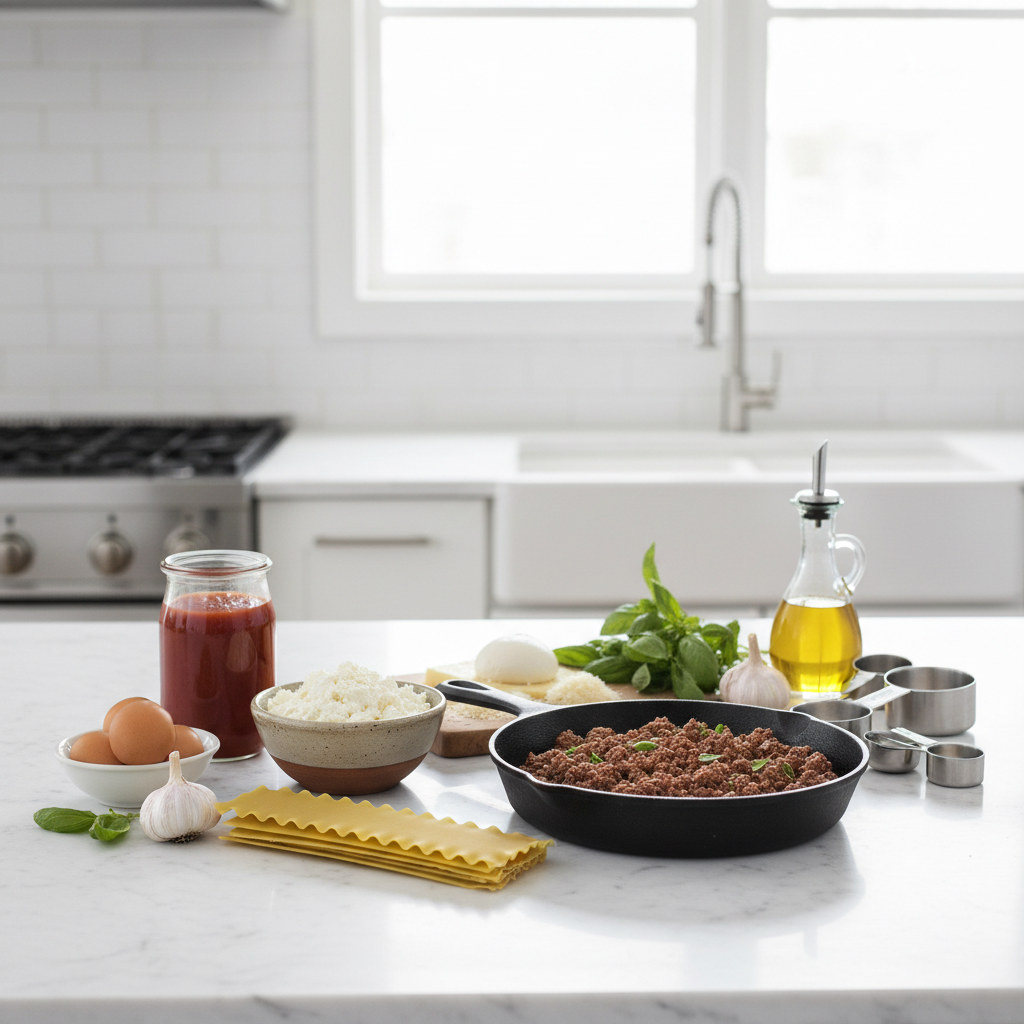
Here’s a dependable ingredient list you can find at almost any U.S. grocery store. Brands vary, but the roles stay the same: flavor, structure, moisture control.
Core ingredients
- Lasagna noodles: regular or no-boil.
- Ground beef or Italian sausage: or a mix for deeper flavor.
- Marinara sauce: use one you’d enjoy on pasta; a watery sauce can sabotage texture.
- Ricotta: whole-milk ricotta usually tastes richer and sets better.
- Mozzarella: low-moisture, part-skim shreds melt well without flooding the pan.
- Parmesan: salty backbone, a little goes a long way.
- Egg: helps ricotta layer set so slices hold.
- Onion, garlic, Italian seasoning, salt, pepper: the basic flavor engine.
Optional upgrades (still easy)
- Tomato paste: thickens sauce fast if it feels thin.
- Fresh basil or parsley: stir in at the end for a brighter finish.
- Spinach: thawed frozen spinach squeezed very dry works best.
Quick decision table: choose your noodles, cheese, and sauce
If you’ve had lasagna turn watery or stiff, this is usually why. Use the table to pick the combination that matches your time and your texture goal.
| Choice | Best for | Watch out for | Editor tip |
|---|---|---|---|
| No-boil noodles | Fast assembly | Dry edges if sauce is too thick | Add a little water to sauce, keep layers well-covered |
| Boiled noodles | More control on texture | Sticky sheets, extra steps | Undercook 1–2 minutes, lay flat to cool |
| Whole-milk ricotta | Creamier, richer slices | Can weep if very wet | Drain briefly if it looks watery |
| Low-moisture mozzarella | Classic melt, less liquid | Can brown quickly | Uncover late in baking, watch last 10 minutes |
The best easy homemade lasagna recipe (step-by-step)
This is the version that tends to work in most ovens and still tastes like you tried. It’s built for repeatability, not perfectionism.
What you’ll need
- 9x13-inch baking dish
- Large skillet or pot
- Mixing bowl
- Foil
Ingredient amounts (flexible, but reliable)
- 1 lb ground beef (or half beef, half Italian sausage)
- 1 jar (24 oz) marinara sauce, plus extra if your noodles look dry
- 1 small onion, diced
- 2–3 garlic cloves, minced
- 1–2 tsp Italian seasoning
- 12 lasagna noodles (regular or no-boil, depending on brand and dish size)
- 15 oz ricotta
- 1 egg
- 2–3 cups shredded low-moisture mozzarella
- 1/2 cup grated Parmesan
- Salt and pepper
1) Make a thicker, tastier meat sauce
Brown meat in a skillet over medium-high heat, drain excess fat if needed, then add onion and cook until soft. Stir in garlic and Italian seasoning for about 30 seconds so it smells fragrant, then add marinara and simmer 8–12 minutes until it looks a little thicker.
Key point: if the sauce looks watery in the pan, it often bakes watery too. Simmer a bit longer, or stir in a spoonful of tomato paste.
2) Mix the ricotta layer
In a bowl, mix ricotta, egg, a handful of Parmesan, a pinch of salt, and black pepper. If you like a more “grown-up” flavor, add chopped parsley or basil.
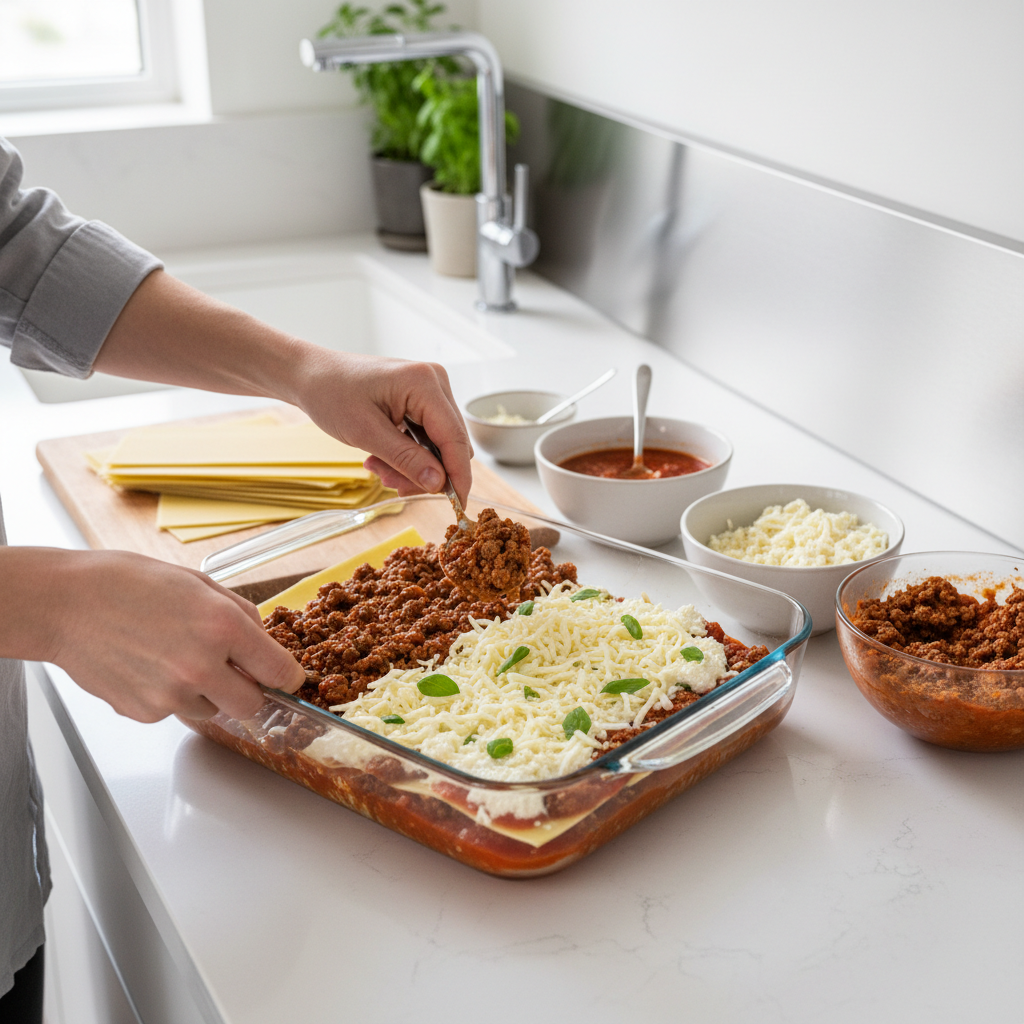
3) Layer in a way that prevents dry corners
- Spread a thin layer of sauce on the bottom of the dish.
- Add noodles in a single layer.
- Spread ricotta mixture.
- Sprinkle mozzarella.
- Spoon meat sauce.
- Repeat until you reach the top, finishing with sauce, then mozzarella and Parmesan.
Small but important: keep the outer noodle edges covered by sauce so they don’t turn into crunchy corners.
4) Bake, then rest
- Bake at 375°F covered for 30–35 minutes.
- Uncover and bake 10–15 minutes until bubbly and lightly browned.
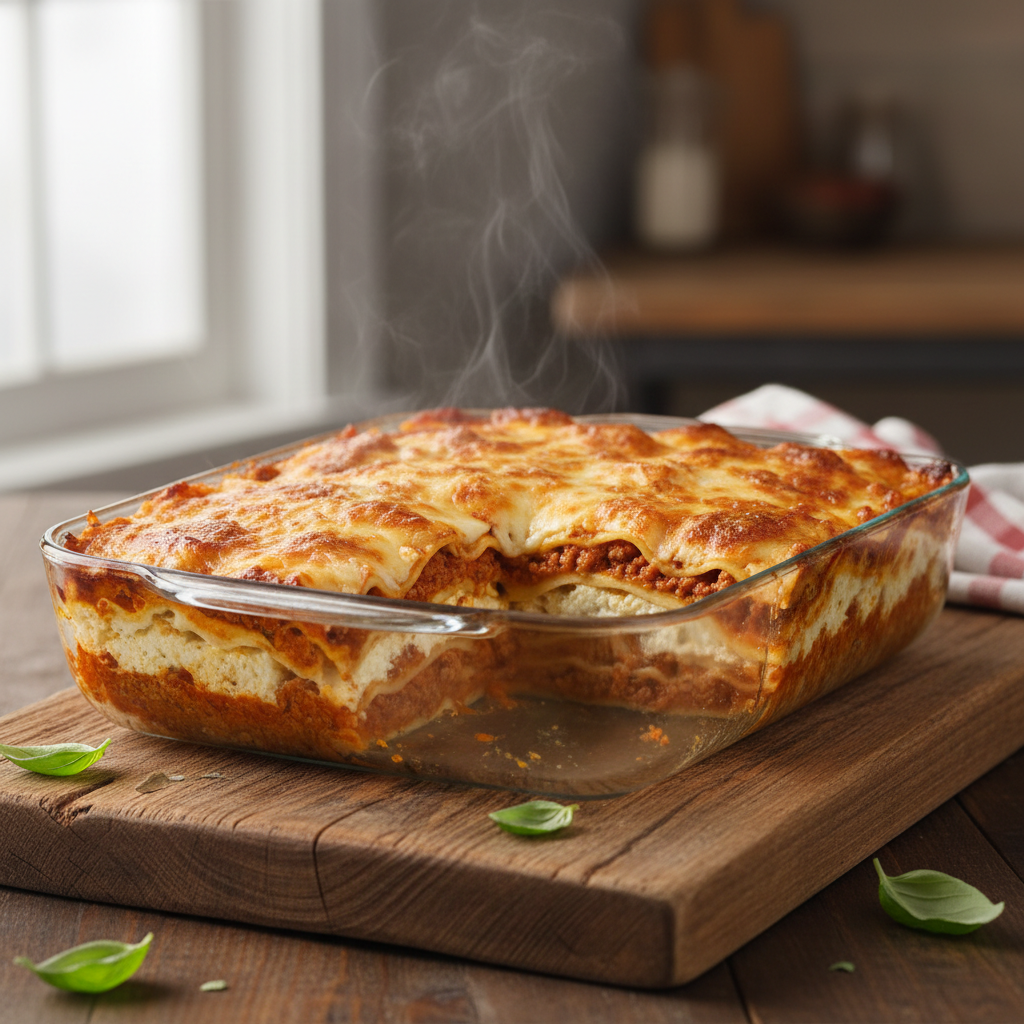
- Rest 15–25 minutes before slicing.
If you want that browned top without overcooking, broil 1–3 minutes, but stay close, broilers can turn “golden” into “burnt” fast.
Self-check: why your lasagna might not be turning out
If your last pan disappointed you, it’s usually one of these. Check the box that matches your situation and you’ll know what to adjust next time.
- Watery slices: sauce too thin, high-moisture mozzarella, ricotta too wet, or not enough rest time.
- Dry, stiff layers: too little sauce, overbaked, no-boil noodles not fully hydrated.
- Greasy top: very fatty meat, cheese piled too thick, not draining fat after browning.
- Falls apart when cut: cut too soon, ricotta layer missing egg, layers too thick and uneven.
Fixing one variable often makes a bigger difference than changing your whole recipe, that’s the quiet secret behind the best lasagna recipe homemade easy searches.
Practical make-ahead, freezer, and reheat tips
Lasagna is one of those rare dinners that can taste better the next day, but only if you store it thoughtfully.
Make-ahead (1 day)
- Assemble, cover tightly, refrigerate.
- Add 10–15 minutes to covered bake time since it starts cold.
Freeze (baked or unbaked)
- Wrap in plastic wrap, then foil, label with date.
- Thaw in the fridge when possible for more even baking.
Reheat without drying out
- Cover with foil, reheat at 350°F until hot in the center.
- Add a few spoonfuls of sauce around the edges if it looks dry.
According to FDA, leftovers should be refrigerated within 2 hours. If you’re serving a crowd, consider slicing and packing portions sooner rather than leaving the whole pan on the counter.
Key takeaways (so you don’t overthink it)
- Thicker sauce = better structure. Simmer a little longer if it looks loose.
- Low-moisture mozzarella helps. It melts well without soaking the layers.
- Rest time is part of cooking. It’s what turns a messy scoop into a clean slice.
- Cover first, uncover last. You want heat-through before browning.
Conclusion: your next lasagna can be the one you repeat
The “best” version is the one you can pull off on a normal night, and this approach gets you there: season each component, control moisture, bake in two phases, then give it a patient rest. If you try one upgrade, make it sauce thickness and rest time, those two changes usually pay off fast.
If you’re cooking tonight, pick your noodles, simmer your sauce a touch thicker than you think, and commit to that 15–25 minute rest. Your future self slicing the first piece will thank you.