
indonesian satay easy is totally doable at home, even if you don’t have a charcoal grill or a pantry full of Southeast Asian ingredients. The trick is keeping the chicken juicy, getting a little char (or at least good browning), and making a peanut sauce that tastes balanced, not like sweet peanut butter.
If you’ve tried satay before and it felt like “just chicken on sticks,” you’re not alone. Satay is really about the contrast: savory-sweet marinade, smoky edges, and a sauce that hits salty, sweet, tangy, and a gentle heat.
This guide walks you through a practical, weeknight-friendly approach: what to buy, what to swap, how to cook it on a grill or in an oven, and how to fix the most common sauce problems without starting over.
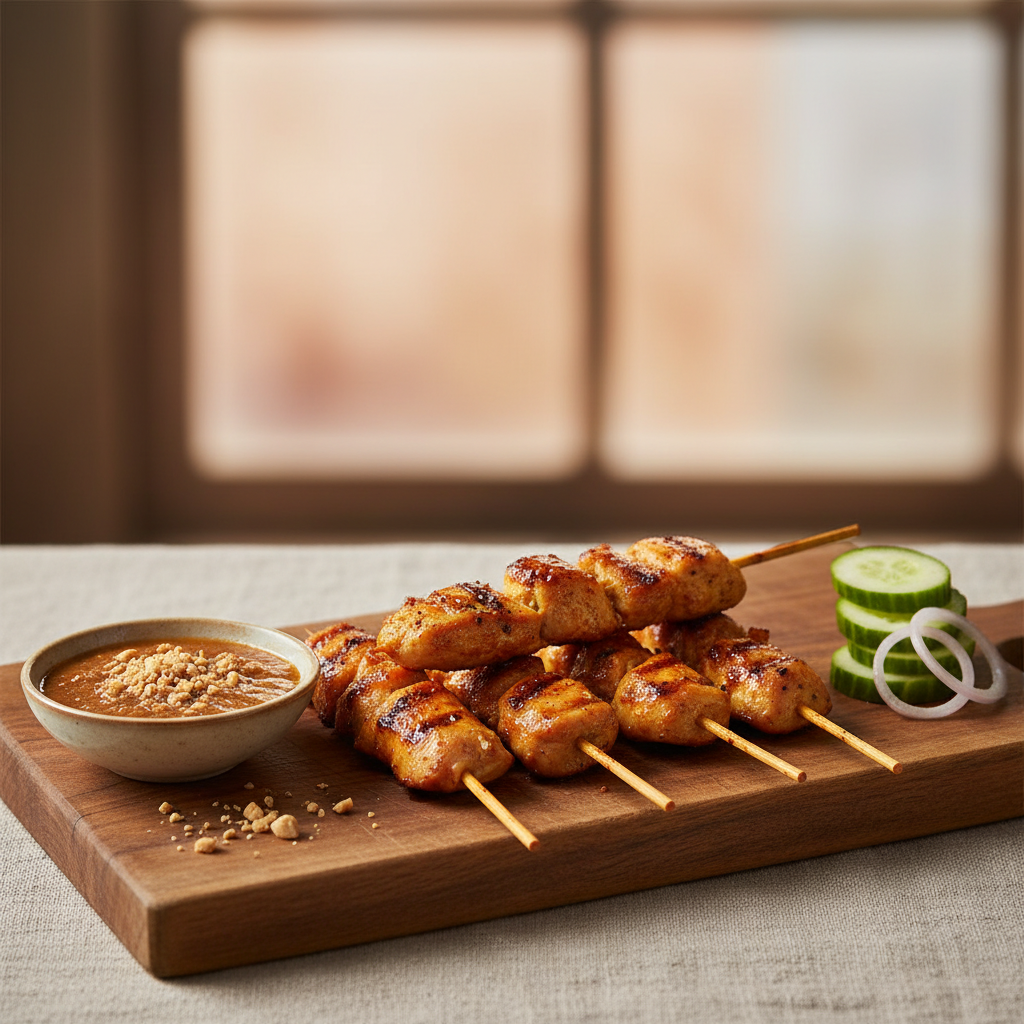
What makes satay taste “right” (and why many home versions miss)
Satay usually goes wrong in two places: the protein gets dry, and the peanut sauce turns one-note. A few small choices fix most of it.
- Cut matters: chicken thighs stay tender with high heat; breast can work but needs tighter timing.
- Marinade needs both salt and sugar: salt seasons throughout, sugar helps browning and that street-stall vibe.
- Peanut sauce needs acid: lime (or vinegar) keeps it from tasting flat and overly sweet.
- Heat is optional but helpful: chili adds lift, not just burn.
According to USDA Food Safety and Inspection Service (FSIS), poultry should reach 165°F internal temperature for safety, so a quick-read thermometer removes the guesswork, especially with skewers.
Ingredients you’ll need (plus realistic swaps)
This version aims for accessible U.S. grocery shopping. If you have an Asian market nearby, great, but you don’t need one for indonesian satay easy weeknight results.
For the chicken
- 1.5 lb boneless skinless chicken thighs (or breast, see notes below)
- 2 tbsp soy sauce
- 1 tbsp brown sugar (or palm sugar if you have it)
- 2 cloves garlic, grated or minced
- 1 tsp grated ginger (optional but good)
- 1 tbsp neutral oil
- 1–2 tsp lime juice
- Optional: 1 tsp ground coriander or cumin
For the peanut sauce
- 1/2 cup creamy peanut butter
- 1–2 tbsp soy sauce
- 1 tbsp brown sugar or honey
- 1–2 tbsp lime juice (start smaller, adjust)
- 1/2 cup warm water or light coconut milk (use what you have)
- 1–2 tsp chili garlic sauce or sambal oelek (optional)
- Optional: 1 tsp toasted sesame oil (tiny amount)
Skewers and extras
- Bamboo skewers (soak 20–30 minutes) or metal skewers
- Cucumber and red onion for serving
- Steamed rice, rice noodles, or a simple salad
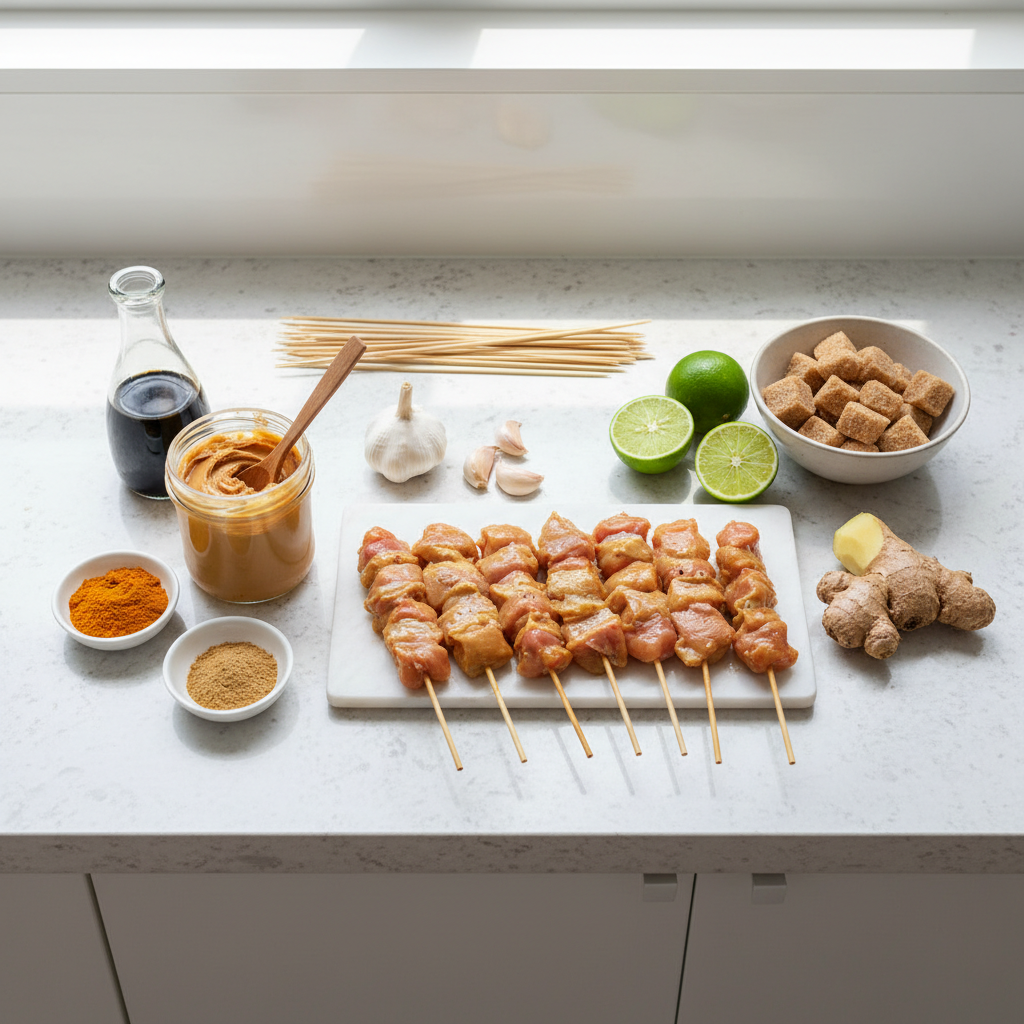
Quick blueprint: time, tools, and how this stays “easy”
Here’s the realistic rhythm most people need. If you only have 30 minutes, you can still make it work, but a little marinating time helps.
- Prep: 10–15 minutes (cut chicken, mix marinade, start sauce)
- Marinate: 20 minutes to overnight (even 20 helps)
- Cook: 8–12 minutes total, depending on heat and size
- Rest: 3 minutes (small step, big payoff for juiciness)
Tools that make life easier: a small whisk for the sauce, a sheet pan if using the oven, and a thermometer if you tend to overcook chicken.
Step-by-step: chicken satay + peanut sauce
1) Prep and marinate
Cut chicken into long, thin strips, about 1-inch wide. Thin pieces cook fast and brown better. Mix soy sauce, brown sugar, garlic, ginger, oil, and lime, then toss chicken until coated.
- Minimum marinate: 20 minutes on the counter while you prep everything else.
- Better: 2–8 hours in the fridge, covered.
If you’re using chicken breast, cut it a bit thicker than you think, because it dries faster when thin.
2) Make the peanut sauce (no blender needed)
Whisk peanut butter with soy sauce, sweetener, and lime juice. Then add warm water a splash at a time until it turns glossy and spoonable. Add chili if you want heat.
- Too thick? Add warm water, 1 tbsp at a time.
- Too sweet? Add lime juice or a touch more soy sauce.
- Too salty? Add a little peanut butter and water to rebalance.
Peanut sauces vary across Indonesia, so don’t stress about a single “correct” flavor. What you want is balance and a sauce that clings.
3) Skewer and cook (choose your method)
Thread chicken onto skewers in a loose ribbon, not tightly packed. Crowding blocks browning.
- Grill: Medium-high heat, oil grates. Cook 3–5 minutes per side until browned, 165°F inside.
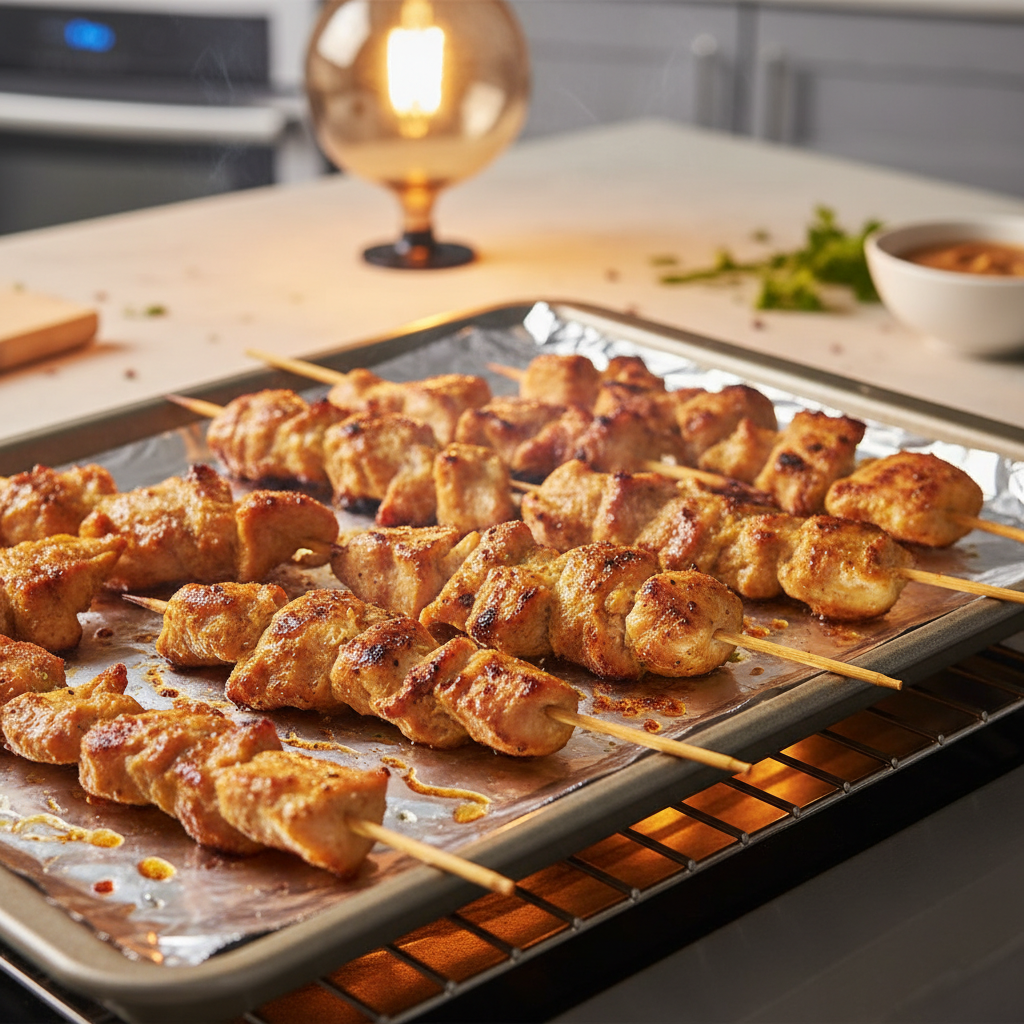
- Broiler: Line a sheet pan with foil, set a rack if you have one. Broil 4–6 inches from heat, flip once.
- Stovetop: A grill pan or cast iron works well. Cook in batches so pieces actually sear.
When chicken comes off the heat, let it sit a few minutes. Then serve with peanut sauce on the side, or lightly brush and cook 30 seconds more for a sticky finish.
Cooking methods compared (pick what you have)
| Method | Best for | Flavor result | Common pitfall |
|---|---|---|---|
| Outdoor grill | Fast browning, parties | Smoky, charred edges | Flare-ups if marinade drips |
| Oven broiler | Apartments, weeknights | Great browning, less smoke | Overcooks quickly if too close |
| Stovetop pan | Small batches, control | Deep sear, less char | Steaming if pan crowded |
If you’re chasing that street-grill aroma without a grill, broiling tends to get you closest with the least fuss.
Common mistakes (and quick fixes)
- Dry chicken: use thighs, don’t overcook, and don’t cut pieces too tiny. Thermometer helps.
- Sauce tastes like plain peanut butter: add lime and soy, then a small amount of chili or garlic.
- Sauce breaks or looks oily: whisk in warm water slowly; it often comes back together.
- No browning: pat off excess marinade lightly, cook hotter, and avoid crowding.
- Skewers burn: soak bamboo skewers, or wrap exposed ends with foil for broiling.
Many people try to “fix” bland satay by adding more sugar. Usually acid or salt is what’s missing, so adjust in that order.
Practical serving ideas and make-ahead tips
This is where indonesian satay easy earns its keep: you can prep almost everything earlier, then cook fast when you’re ready.
- Make-ahead: marinate chicken up to 24 hours; peanut sauce keeps 4–5 days in the fridge.
- Meal prep: cook skewers, cool, refrigerate; reheat gently in a skillet so they don’t dry out.
- Serve with: cucumber-onion salad, jasmine rice, or rice noodles with extra lime.
- Party move: set up a “dip bar” with peanut sauce, extra chili, lime wedges, and chopped peanuts.
Key takeaways: keep chicken pieces larger than bite-size, don’t skip lime in the sauce, and prioritize browning over long cook time.
Conclusion: a satay routine you’ll actually repeat
Once you treat satay as “quick-cooking chicken + balanced peanut sauce,” it stops feeling intimidating. The flavor comes from small, controllable choices: a marinade with sugar and salt, high heat for color, and a sauce adjusted with lime until it wakes up.
If you want a simple next step, buy chicken thighs and make the peanut sauce first, then cook under the broiler the first time. It’s the least equipment-dependent path to a result that still feels like satay.
FAQ
How long should I marinate chicken for satay?
Twenty minutes is usually enough to improve flavor, but 2–8 hours tends to taste more “satay-like.” Past a day, texture can get a little soft depending on how much acid you used.
Can I make this indonesian satay easy recipe without coconut milk?
Yes. Warm water works surprisingly well for thinning peanut sauce. Coconut milk adds richness, but it’s not required for a good result.
What’s the best peanut butter to use?
Regular creamy peanut butter is the easiest because it emulsifies smoothly. Natural peanut butter can work, but you may need more whisking and small adjustments to keep the sauce cohesive.
Is satay spicy?
It can be mild or spicy depending on chili amount. Start with a small spoon of chili garlic sauce, taste, then build. It’s easier to add heat than to remove it.
Can I bake satay instead of grilling?
You can, but baking alone often gives less browning. A good compromise is bake until nearly done, then broil briefly for color, watching closely so it doesn’t overcook.
How do I keep skewers from sticking to the grill?
Oil the grates and make sure the grill is fully preheated. Also, don’t try to flip too early; once the surface browns, it releases more easily.
Is it safe to brush sauce on while cooking?
If the sauce touched raw chicken, don’t use it as a finishing sauce unless you simmer it first. Keeping dipping sauce separate is the simplest, safest habit.
What protein substitutes work for satay?
Pork, shrimp, tofu, and even beef can work, but cook times change a lot. If you’re unsure, use a thermometer and adjust heat so you get browning without drying it out.
If you’re trying to make indonesian satay easy for a weeknight, a small shortcut that still feels “real” is prepping the peanut sauce and skewer-ready chicken the night before, then cooking everything fast under the broiler when dinner pressure hits.