
croutons homemade easy is really about two things: getting that loud crunch without burning, and keeping the centers from turning rock-hard. The oven makes both more predictable, even if you’re starting with random bread from the back of the pantry.
If you’ve ever bought croutons and wondered why they taste dusty or overly salty, homemade is the fix. You control the oil, the seasoning, and the size, so they actually match your salad or soup instead of fighting it.
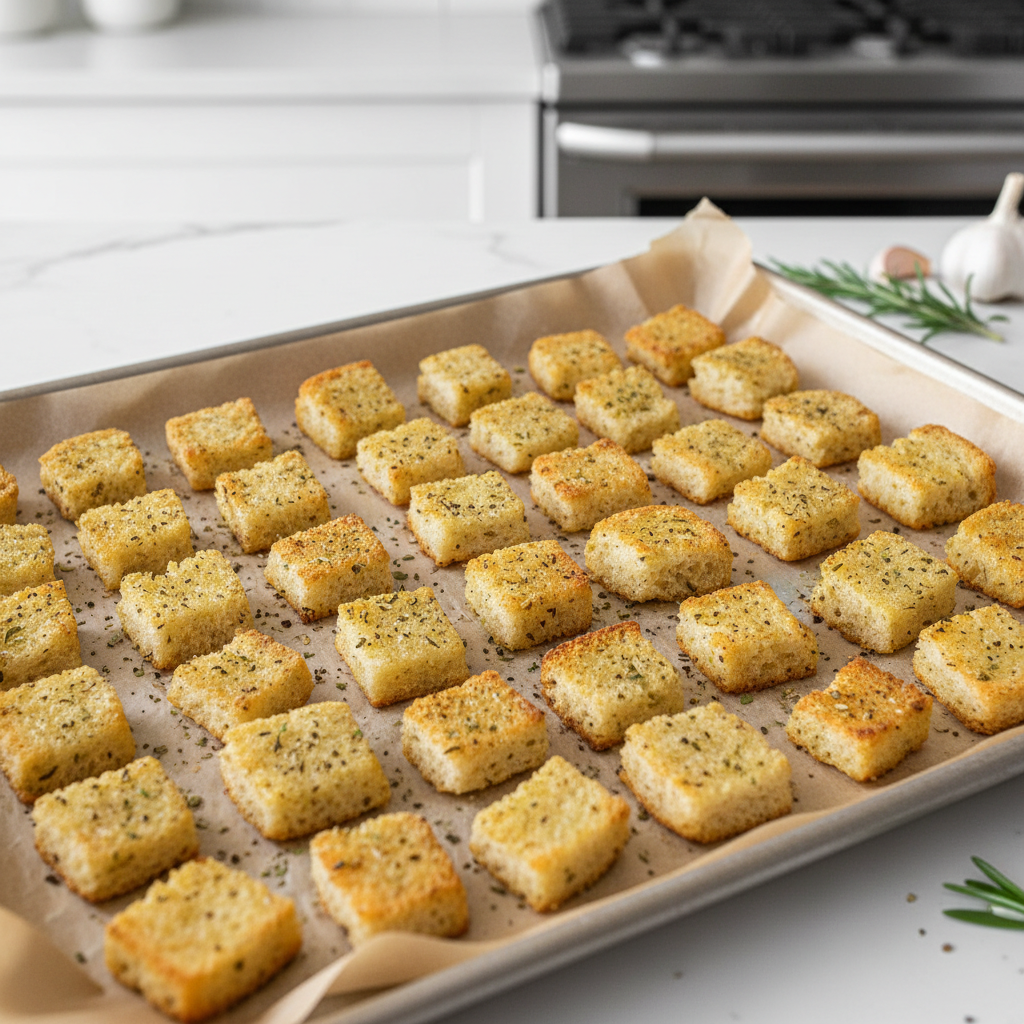
And yes, you can do this with “not-perfect” bread. In fact, slightly stale bread often performs better because it dries out faster and browns more evenly. Below is the oven method I’d use for weeknight cooking: quick, flexible, and hard to mess up.
What makes oven croutons actually work (and why batches fail)
Most crouton disasters come from one of these: too much oil, uneven cube size, or oven heat that’s too aggressive. The good news is you can correct all three without fancy tools.
- Uneven cubes bake unevenly, small pieces burn while big pieces stay chewy.
- Too much oil tastes heavy and can make croutons feel greasy instead of crisp.
- Too high a temperature browns the outside fast, leaving the inside tough or dry.
- Overcrowding traps steam, so you end up “toasting” rather than crisping.
There’s also bread type. Brioche or very soft sandwich bread can work, but often needs a slightly lower temp and a bit more bake time so it dries without scorching.
Quick self-check: which crouton problem are you trying to solve?
If you want croutons homemade easy to be repeatable, pick your main goal first, then adjust one or two variables instead of changing everything at once.
- “Mine burn on the edges.” Your pieces are likely too small, or the oven runs hot, or you’re skipping the toss midway.
- “They’re crunchy but too hard.” Temp may be too high, or cubes too big, or bread too stale to start.
- “They’re not crisp, kind of chewy.” Pan is crowded, oil amount is high, or bake time is too short.
- “Seasoning tastes uneven.” Seasoning went on after baking, or oil wasn’t distributed well.
One more tell: if the croutons soften fast after cooling, they probably didn’t dry enough in the oven, not a storage problem.
Easy homemade croutons (oven method): the base recipe
This is the reliable “base batch.” From here, you can pivot to garlic-herb, Parmesan, spicy, or even cinnamon-sugar for sweet salads.
Ingredients (makes about 4 cups)
- 4 cups bread cubes (about 4–5 slices), roughly 3/4-inch pieces
- 3 tbsp olive oil or melted butter
- 1/2 tsp kosher salt (adjust if using salted butter)
- 1/2 tsp garlic powder (optional but popular)
- 1/2 tsp dried Italian seasoning or dried parsley
- Black pepper, to taste
Steps
1) Heat the oven to 375°F. Line a sheet pan with parchment for easier cleanup, or go bare pan for a slightly “toastier” bottom.
2) Toss bread with fat first. Put cubes in a bowl, drizzle oil or butter, then toss until most surfaces look lightly coated, not shiny-wet.
3) Add seasoning, toss again. Salt and dry spices stick better once the oil has touched the bread.
4) Spread in one layer. Leave a bit of space so moisture can escape.
5) Bake 10 minutes, toss, then bake 5–10 minutes more. Pull them when they’re golden and crisp, remembering they firm up as they cool.
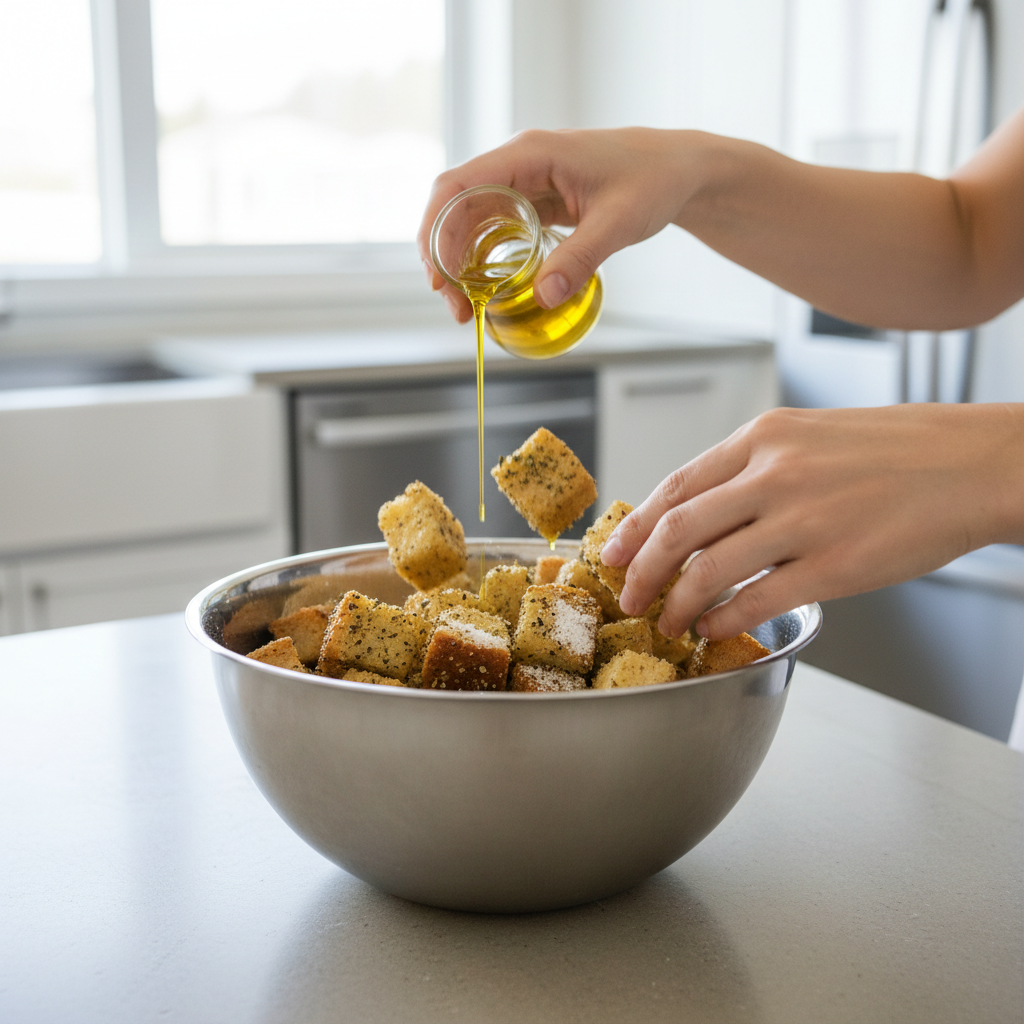
Cooling matters: let croutons cool on the pan for 10–15 minutes. If you pour them into a jar while warm, trapped steam can soften them.
According to USDA guidance on leftovers, perishable foods shouldn’t sit out for extended periods at room temperature. Croutons are typically low-risk once fully dried, but if yours include cheese, meat drippings, or you live in a very warm environment, keep cooling time reasonable and store promptly.
Timing and temperature cheat sheet (by bread type)
This table is meant to save you a second batch. Ovens vary, so treat the “total time” as a range and watch color in the last few minutes.
| Bread type | Best cube size | Oven temp | Typical total bake time | Notes |
|---|---|---|---|---|
| Sourdough / artisan loaf | 3/4–1 inch | 375°F | 15–22 min | Holds shape well, great crunch |
| French/Italian bread | 3/4 inch | 375°F | 14–20 min | Even browning, easy “base batch” |
| Sandwich bread | 3/4 inch | 350–375°F | 16–24 min | Can brown fast, watch edges |
| Brioche/challah | 1 inch | 350°F | 18–28 min | Sugars brown quickly, go lower and slower |
| Gluten-free loaf | 3/4 inch | 350–375°F | 15–25 min | Texture varies, toss gently to avoid crumbling |
Flavor variations that don’t overcomplicate the batch
You can keep the same bake method and just adjust seasoning. This is where croutons homemade easy stays fun, not fussy.
Garlic-Parmesan (restaurant vibe)
- Add 1–2 tbsp grated Parmesan in the last 5 minutes, or right after baking while still warm
- Use garlic powder, not fresh garlic, if you’re chasing even browning
Spicy (for Caesar salads or tomato soup)
- Add 1/4–1/2 tsp smoked paprika
- Add a pinch of cayenne, go light at first
Lemony-herb (bright, not heavy)
- Add dried oregano + black pepper
- Finish with a little lemon zest after baking, off-heat
“Everything bagel” style
- Use everything seasoning, then reduce added salt
- Watch sesame and poppy seeds, they can toast quickly
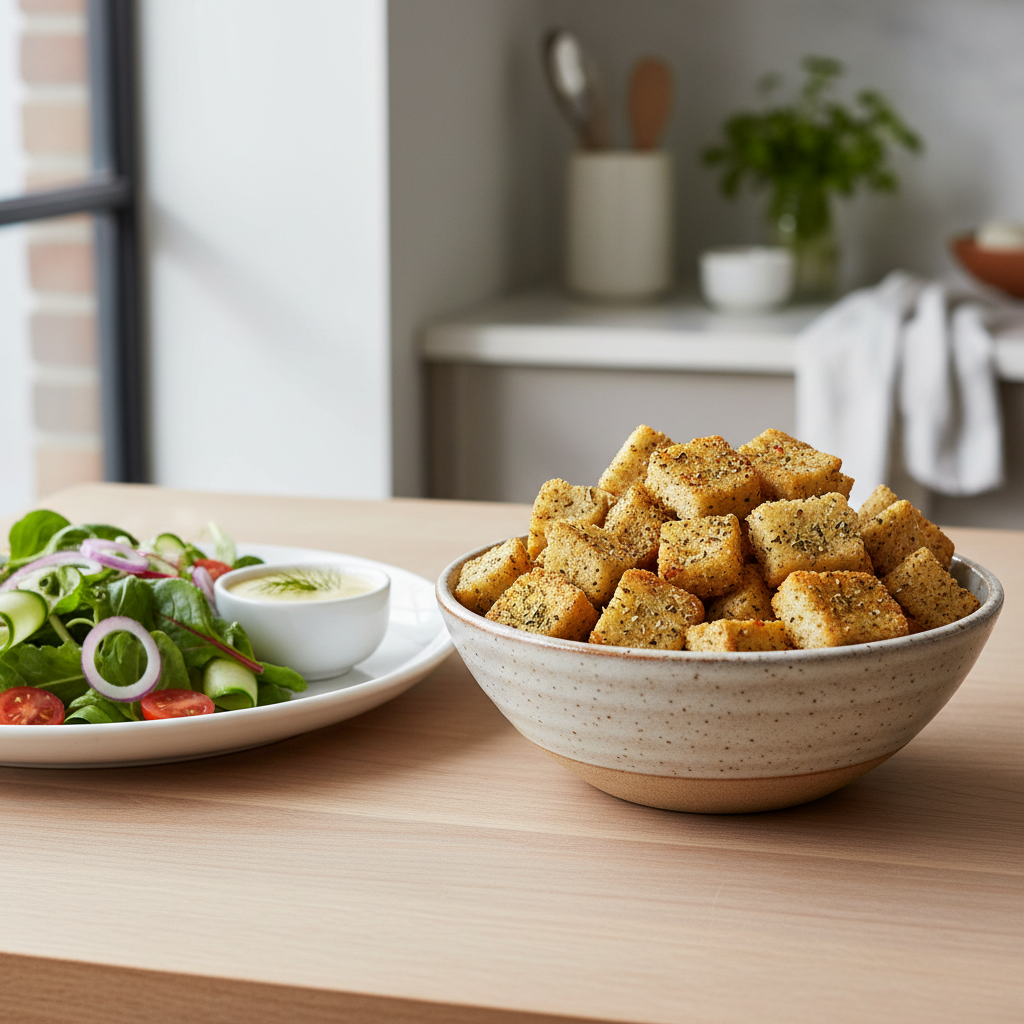
If you’re adding fresh herbs, add them after baking. Fresh herbs tend to burn, and burnt parsley is… not the vibe.
Practical tips: make them crisp, then keep them crisp
Homemade croutons usually taste better on day one, but they can stay crunchy if you store them like a dry snack, not like leftovers with moisture.
- Cool fully before sealing. Warm croutons sweat inside containers.
- Use an airtight jar or container. Thin baggies let humidity creep in.
- Room temp storage works for plain, dried croutons for a few days. If your batch includes cheese or other perishable add-ins, consider refrigeration and use sooner.
- To re-crisp: 300°F for 5–7 minutes on a sheet pan, then cool.
Freezing is possible, but texture can vary by bread. If you do freeze, re-toast straight from frozen, don’t thaw on the counter where condensation can soften them.
Common mistakes (and what to do instead)
- Using fresh minced garlic in the oil. It often burns before the bread crisps. Use powder, or rub a cut garlic clove on warm croutons after baking.
- Skipping the mid-bake toss. Even a quick shuffle improves color and crunch.
- Going “healthy” with zero fat. You can reduce oil, but a small amount helps seasoning stick and browning happen evenly.
- Trying to bake from a soaking-wet toss. If cubes look glossy and dripping, blot lightly or add more bread, otherwise you’ll fight sogginess.
One subtle fix: if your oven has hot spots, rotate the pan when you toss. Small move, big difference.
Key takeaways before you bake
- Keep cubes consistent so the batch finishes together.
- Oil first, season second for better flavor coverage.
- Single layer + space beats piling up every time.
- Pull when golden and let them finish crisping as they cool.
Conclusion: a small habit that upgrades a lot of meals
If you want croutons homemade easy to become a no-brainer, stick with the base recipe once, then only change one thing per batch, maybe the bread type or seasoning. You’ll learn your oven fast that way.
Make a sheet pan this week using whatever bread you already have, then store the extras in a jar for quick salads and soups. The next time you’re about to toss stale bread, you’ll know exactly what to do.
FAQ
How do I make homemade croutons crispy but not too hard?
Use a moderate oven temp like 375°F, cut cubes around 3/4-inch, and bake until golden, not dark. If they turn hard, lowering the temp slightly and extending time often helps them dry more evenly.
What bread is best for oven croutons?
Sourdough and sturdy artisan loaves tend to give the best crunch and hold their shape. Sandwich bread works too, it just needs closer watching because it can brown faster.
Can I use butter instead of olive oil?
Yes. Butter brings richer flavor and browns nicely, but it can darken quicker due to milk solids. If your croutons brown too fast, try 350°F or mix butter with a little oil.
Why did my croutons come out oily?
Usually the oil ratio is high for the amount of bread, or the cubes were crowded and “fried” in pooled fat. Use less oil, toss thoroughly, and spread into a true single layer.
How long do homemade croutons last?
For plain, fully dried croutons, a few days at room temperature in an airtight container is common, but humidity can shorten that. If you added cheese or other perishable ingredients, storage and safety can vary, when in doubt, store cold and use sooner.
Can I make croutons without an oven?
You can pan-toast in a skillet on medium heat, stirring often, but it needs attention. The oven is easier for larger batches and tends to dry the centers more evenly.
How do I keep seasoning from falling off?
Toss bread with oil first, then add salt and spices. Seasoning clings to the lightly coated surface, and a second toss halfway through baking can improve coverage.
Are homemade croutons healthier than store-bought?
They can be, mainly because you control oil and sodium. “Healthier” depends on your bread choice and portion, so if you’re managing a specific diet, it may help to check ingredients and talk with a nutrition professional.
If you’re already making salads or meal-prep soups, keeping a jar of homemade oven croutons on hand is a low-effort upgrade, and if you want a more set-and-forget approach, batch-baking and re-crisping small portions during the week tends to feel easiest.