
Best grilled cheese sandwich crispy is mostly about heat control and layering, not some secret ingredient you have to order online. If your sandwich keeps turning out pale, greasy, or burned outside while the cheese stays stubborn in the middle, you’re in the most common grilled-cheese trap.
The good news, you can fix this with a few small choices: the right bread thickness, a smarter fat strategy, and a two-zone pan approach that buys the cheese time to melt without punishing the crust.
I’ll walk you through a reliable method, a quick self-check to diagnose what’s going wrong, and a couple of variations for cast iron, nonstick, and even a griddle.
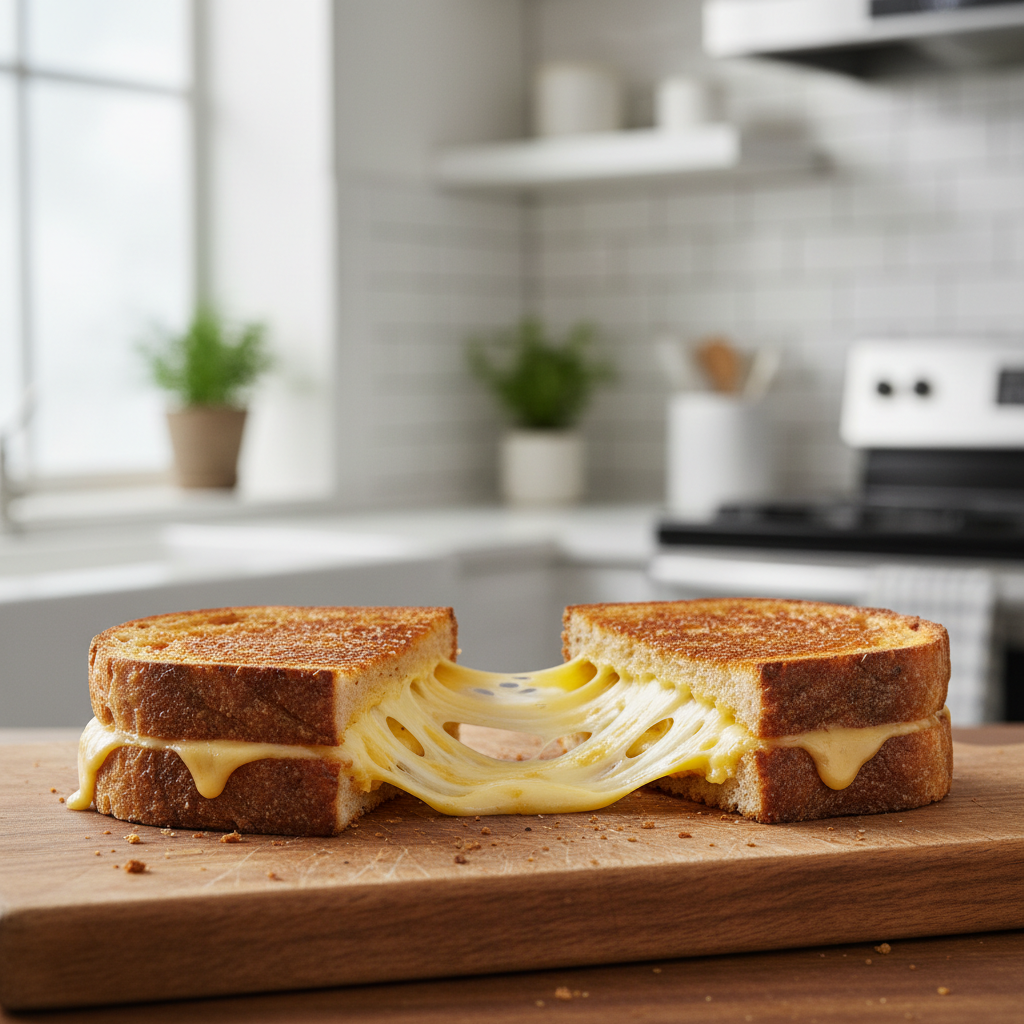
What “crispy” really means (and why most sandwiches miss it)
People say “crispy” but often chase the wrong thing. You’re not trying to dry the bread out, you’re trying to build a thin, even crust while the inside stays tender and the cheese melts fully.
- Crisp crust: controlled browning plus moisture management
- Melted center: enough time at a gentle heat to soften cheese proteins
- No greasy bite: fat applied in a way that browns, not soaks
According to USDA Food Safety and Inspection Service, keeping hot foods hot and avoiding prolonged room-temperature holding helps reduce food-safety risk. For grilled cheese, that translates to: cook it, serve it, don’t let it sit around half-warm for ages.
Ingredients and gear that actually matter
This is a short recipe, so each choice shows up in the final bite.
Best bread for a crisp grilled cheese
- White sandwich bread: classic, browns fast, can go from pale to burnt quickly
- Sourdough: sturdier, great crunch, needs slightly longer cook time
- Texas toast: thick and satisfying, but demands lower heat so the middle melts
What to avoid when you want crunch: very thin bread that tears, or very airy bread that drinks fat and goes limp.
Cheese: go for melt + flavor
- American cheese: melts the smoothest, great “glue” layer
- Cheddar: sharp flavor, can split if heat is too high
- Low-moisture mozzarella: stretch, mild flavor, pairs well with cheddar
A practical rule: use one reliable melter (American or mozzarella) plus one flavor cheese (cheddar, gruyère, pepper jack).
Butter vs mayo (and a third option)
- Butter: best flavor, can brown fast if pan runs hot
- Mayo: spreads easily, browns evenly, flavor is subtle when used thinly
- Butter + neutral oil: a tiny bit of oil helps butter brown without burning as quickly
Quick self-check: why your grilled cheese isn’t crisp
If you’ve tried “more butter” and it still fails, this checklist usually tells you why.
- Burns before melting: heat too high, cheese too cold/thick, bread too thick
- Soggy surface: too much fat, lid trapped steam too long, cheese piled too high
- Pale and dry: not enough fat coverage, pan not preheated, heat too low
- Greasy: butter melted into pan instead of coating bread, or bread too porous
- Uneven browning: pan hotspots, sandwich not pressed evenly
One small habit that helps: let cheese sit at room temperature for about 10 minutes while you prep, so it melts before the crust over-browns.
The best crispy grilled cheese sandwich recipe (step-by-step)
This method aims for a steady, even crust and a fully melted center. It works on a skillet or griddle.
Ingredients (1 sandwich)
- 2 slices bread (sourdough or sturdy sandwich bread)
- 1 slice American cheese
- 1/2 cup shredded sharp cheddar (or 2 thin slices)
- 1 to 2 tsp softened butter or mayonnaise (thin layer)
- Optional: 1/2 tsp neutral oil if using stainless steel or cast iron
Method
- Preheat a skillet over medium-low for 2–3 minutes. If you’re unsure, start lower; you can always nudge heat up.
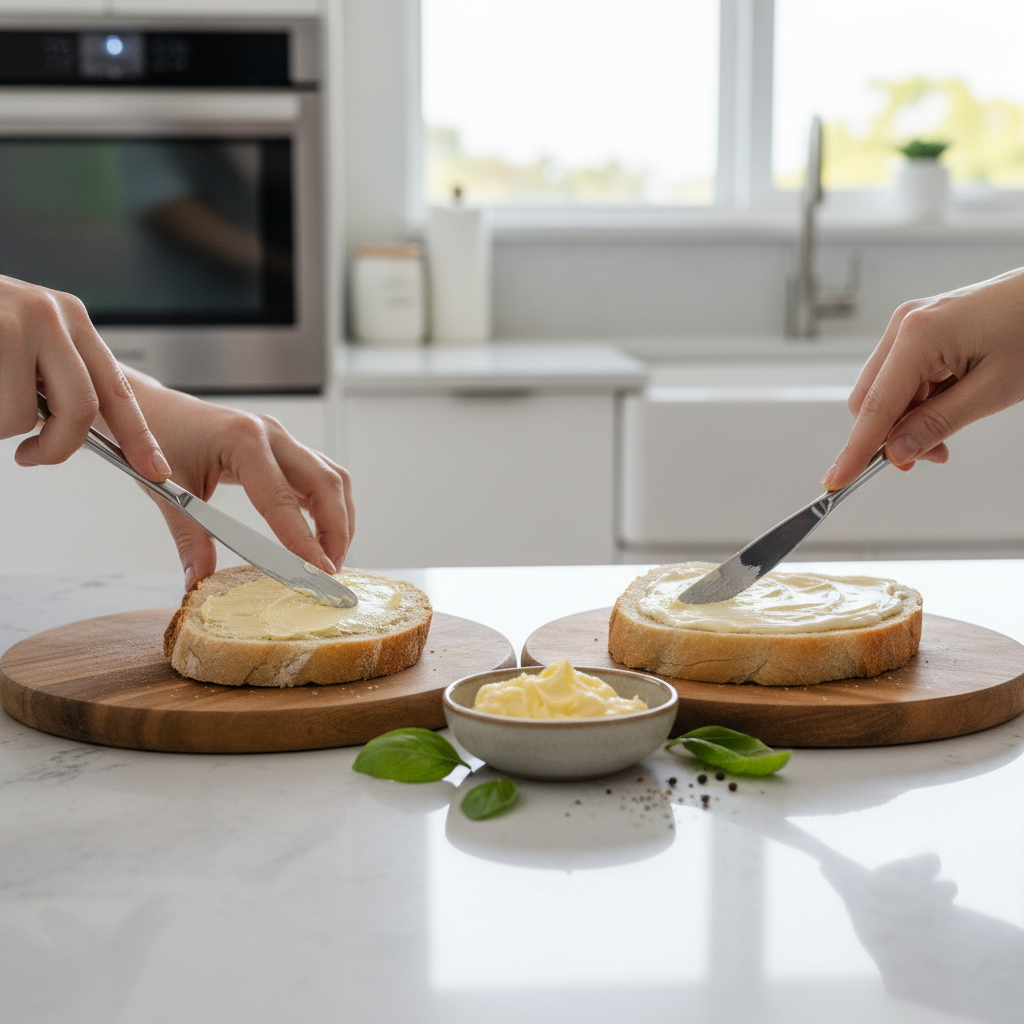
- Coat the bread on the outside with a thin, even layer of butter or mayo, right to the edges.
- Build smart: bread (coated side down), American cheese, cheddar, then top bread (coated side up). The American slice helps everything melt together.
- Cook gently 3–5 minutes per side. Press lightly with a spatula a couple times, not a smash, just enough to keep contact.
- Flip when the first side turns deep golden, not dark brown. If it’s browning too fast, lower heat.
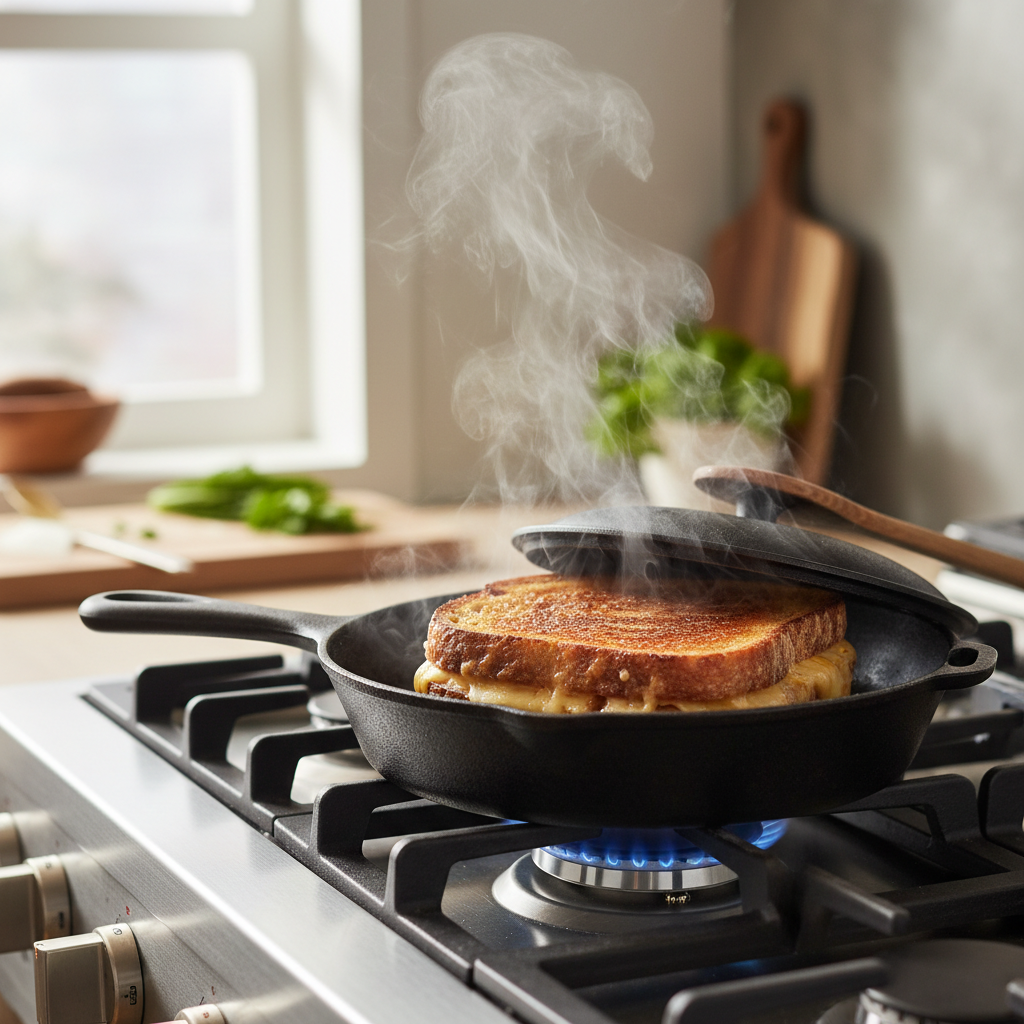
- Finish the melt: if the crust looks good but the center needs help, cover the pan for 30–60 seconds, then uncover to keep the surface crisp.
- Rest 1 minute on a cutting board, then slice. This short rest helps cheese set slightly so it doesn’t all run out.
Key point: for best grilled cheese sandwich crispy results, the pan should sound like a gentle sizzle, not a loud crackle. Loud usually means “too hot.”
Timing, heat, and cheese: a simple guide (table)
Use this as a quick reference when you switch bread or pans.
| Situation | Heat level | What to change | Why it works |
|---|---|---|---|
| Thick bread (Texas toast) | Low to medium-low | Cook longer, cover briefly near the end | Crust needs time; lid helps melt without over-browning |
| Cast iron skillet | Medium-low | Preheat longer, avoid high heat spikes | Holds heat well; prevents uneven browning |
| Nonstick skillet | Medium | Less fat, keep an eye on browning speed | Efficient contact browns quickly |
| Cheddar-heavy filling | Medium-low | Use a melty “base” cheese (American) | Improves melt and texture, reduces splitting |
Practical upgrades that keep it crispy
You don’t need to overcomplicate grilled cheese, but a few small tweaks can push it from good to “why is this so perfect?”
Try the “two-layer cheese” approach
- Put a thin layer of cheese directly on each bread slice
- Add the rest in the center
This reduces gaps, improves adhesion, and helps the sandwich flip cleanly.
Add crunch without drying it out
- Parmesan crust: sprinkle a tablespoon of finely grated parmesan in the pan, then place the sandwich on it for a lacy, crispy edge
- Sesame or everything seasoning: press into the mayo layer for texture
- Pickles on the side: keeps the interior from going watery, but still gives acid and crunch
Make it ahead (kind of)
If you need to cook for a group, you can keep sandwiches warm in a 200°F oven for a short time, but crispness tends to fade as they sit. If you must hold them, place on a wire rack, not a flat sheet pan, so steam has somewhere to go.
Common mistakes (and what to do instead)
- Slathering butter thick: use a thin, even coat; extra fat often leads to greasy bread.
- Pressing too hard: gentle pressure helps contact, hard pressing squeezes cheese out and can toughen the crumb.
- Using fridge-cold cheese bricks: colder cheese delays melt; slice thin or use shredded, and let it warm slightly.
- Keeping the lid on the whole time: trapped steam can soften the crust; cover briefly, then uncover.
- Cranking heat to “save time”: fast browning rarely matches melt timing, especially with thicker bread.
If you’re watching sodium or saturated fat for health reasons, changes like lower-fat cheese or less butter might help, but results vary. For personalized guidance, it’s reasonable to check with a qualified nutrition professional.
Conclusion: your next crispy grilled cheese, without guesswork
The best grilled cheese sandwich crispy outcome comes from a calm pan, thin and even fat coverage, and a melt-friendly cheese blend. Once you dial that in, you can swap breads and cheeses without losing the crunch.
Action steps: cook your next one on medium-low, use a thin spread of butter or mayo edge-to-edge, and cover the pan only briefly to finish the melt, then serve right away.