
how to make noodles at home fresh usually comes down to a few unglamorous details: a workable dough, enough resting time, and a rolling thickness you can repeat, even if you do everything with a pin and a knife.
If your past attempts turned out sticky, tore when you rolled them, or cooked into a soft blur, you are not alone. Fresh noodles behave differently than dried pasta, they hydrate quickly, and small changes in flour, humidity, and resting time show up fast in the pot.
This guide keeps it practical, with two reliable dough options, a simple thickness cheat sheet, and a cook-and-store plan that prevents clumping. No fancy tools required, but I will tell you where a pasta machine genuinely helps.
What you need (and what you can skip)
You can make great fresh noodles with pantry basics. The trick is choosing a flour that matches the texture you want, then being consistent with measuring.
Core ingredients
- Flour: all-purpose works for most home cooks, bread flour adds chew, “00” flour rolls silky but is not mandatory
- Liquid: eggs for richer dough, water for lighter, springier noodles
- Salt: for flavor and better dough structure
- Optional: a teaspoon of oil can make hand-rolling slightly easier, but use lightly
Helpful tools
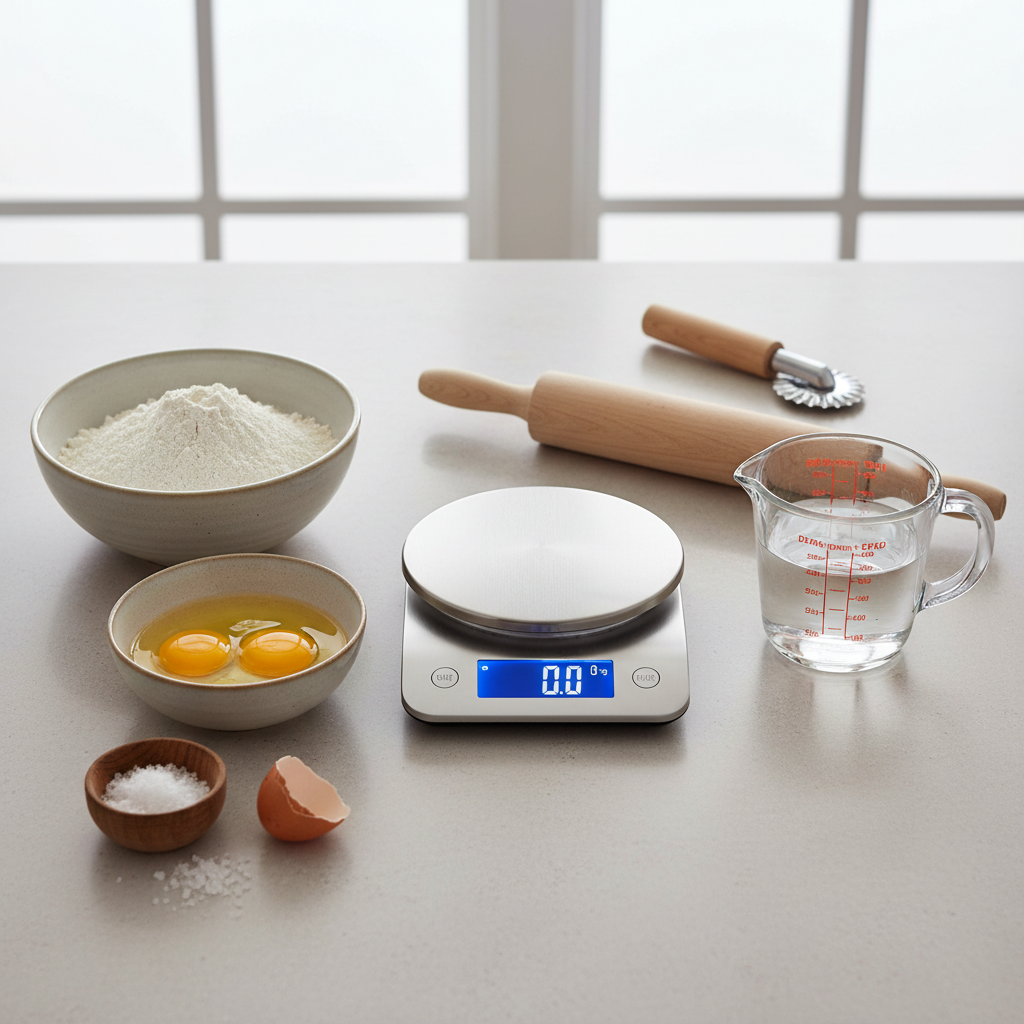
- Digital scale (most consistent), mixing bowl, bench scraper
- Rolling pin or pasta machine
- Sharp knife for cutting, or a simple cutter wheel
- Large pot and a wide strainer
According to USDA Food Safety and Inspection Service (USDA FSIS), raw eggs can carry bacteria, so basic kitchen hygiene matters, wash hands, avoid cross-contamination, and cook noodles promptly or refrigerate dough.
Pick your noodle style: two doughs that cover most needs
Most people searching how to make noodles at home fresh actually want one of two outcomes: an egg noodle for butter, soup, or stroganoff vibes, or a water-based dough for chewier noodles that pair well with brothy bowls and stir-fries.
Option A: Easy egg noodle dough (beginner-friendly)
- 200 g all-purpose flour (about 1 2/3 cups, spooned and leveled)
- 2 large eggs
- 1/2 tsp fine salt
- 1–2 tsp water only if needed
Egg dough tends to roll smoothly, and it forgives small measuring mistakes, which is why it is a good starting point.
Option B: Chewy water noodle dough (better bite)
- 250 g bread flour (or all-purpose if that is what you have)
- 130–150 g water (start low, add as needed)
- 1/2 tsp fine salt
Water dough can feel dry at first, then relax into something workable after resting. That rest is not optional if you want smooth rolling.
Why dough gets sticky, tough, or tears (real-world causes)
Fresh noodle dough problems rarely mean you “did it wrong.” Most issues come from hydration and gluten development being out of sync.
- Too sticky: high humidity, too much water, or not enough bench flour during rolling
- Too tough: not enough rest, over-flouring while kneading, or using very high-protein flour without adjusting water
- Tears when rolling: dough not rested, or surface dries out, especially near edges
- Noodles clump after cutting: strands too wet, not dusted, or piled too tightly
- Mushy after boiling: cut too thin for your sauce, or overcooked because fresh noodles cook fast
In practice, the biggest lever is rest time. Resting allows flour to fully hydrate and gluten to relax, so you can roll thin without fighting the dough.
Quick self-check: are you at the right dough stage?
Before you roll or cut anything, take 30 seconds and check the dough. This saves a lot of frustration later.
- Looks: mostly smooth, not shaggy, no dry flour pockets
- Feel: slightly tacky but not sticky, it should release from your hand
- Press test: press with a finger, the dent should slowly spring back
- Stretch: a small piece should stretch a bit before tearing, not snap instantly
If it fails the test, adjust gently. Add water by the teaspoon, or flour by the tablespoon, knead a minute, then let it sit again.
Step-by-step: how to make fresh noodles (by hand or machine)
how to make noodles at home fresh becomes repeatable once you treat it like a short workflow: mix, knead, rest, roll, cut, dust, cook.
1) Mix the dough
Combine flour and salt. Add eggs or water, then mix until you see a shaggy mass. If it feels dry and refuses to come together, add liquid in tiny amounts, because you can always add more, but pulling back is harder.
2) Knead until cohesive
Knead 8–10 minutes by hand, or 5–6 minutes in a stand mixer on low. You want a firm dough that looks smoother each minute. If your forearms complain, that is normal, take a short pause, then continue.
3) Rest, then rest again if needed
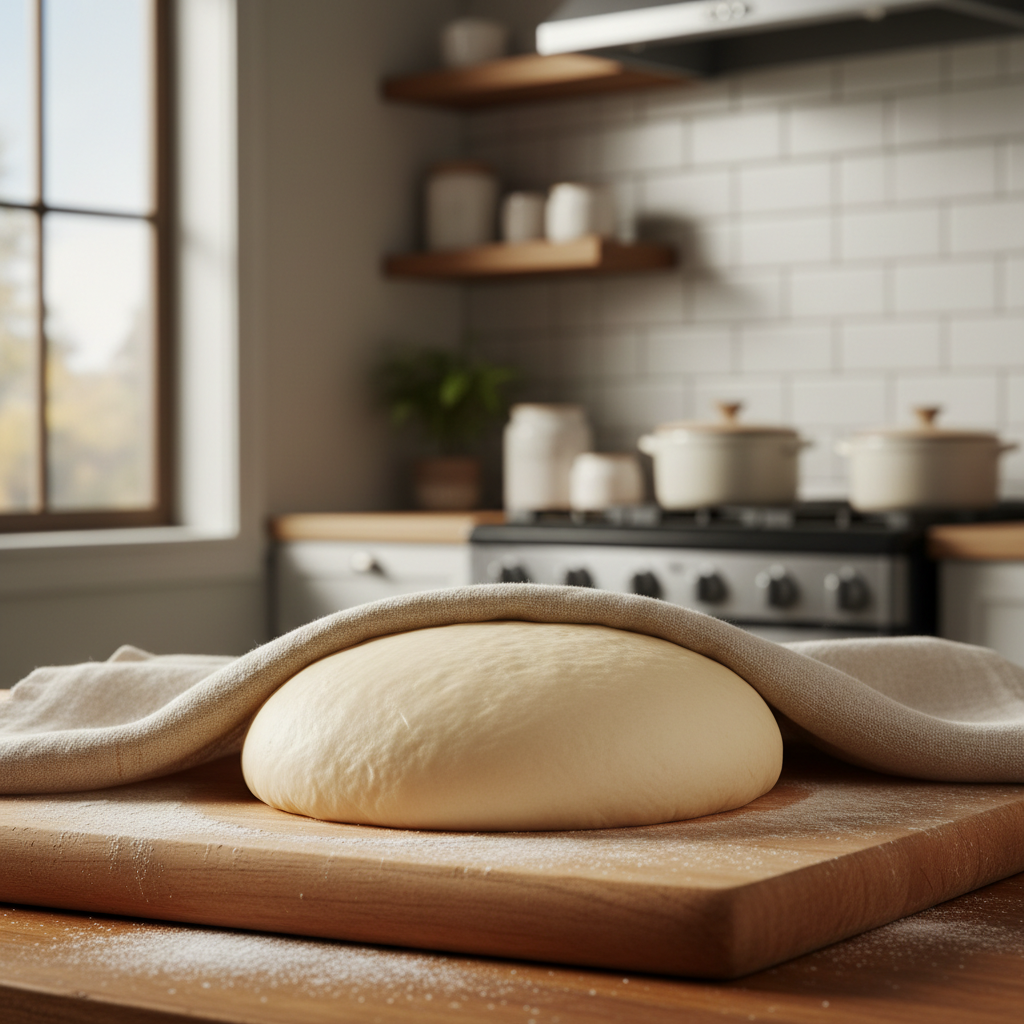
Wrap tightly and rest 20–40 minutes at room temp. If your kitchen is very warm, shorter tends to work better. If you use bread flour and it fights you, rest closer to 40 minutes.
4) Roll to thickness
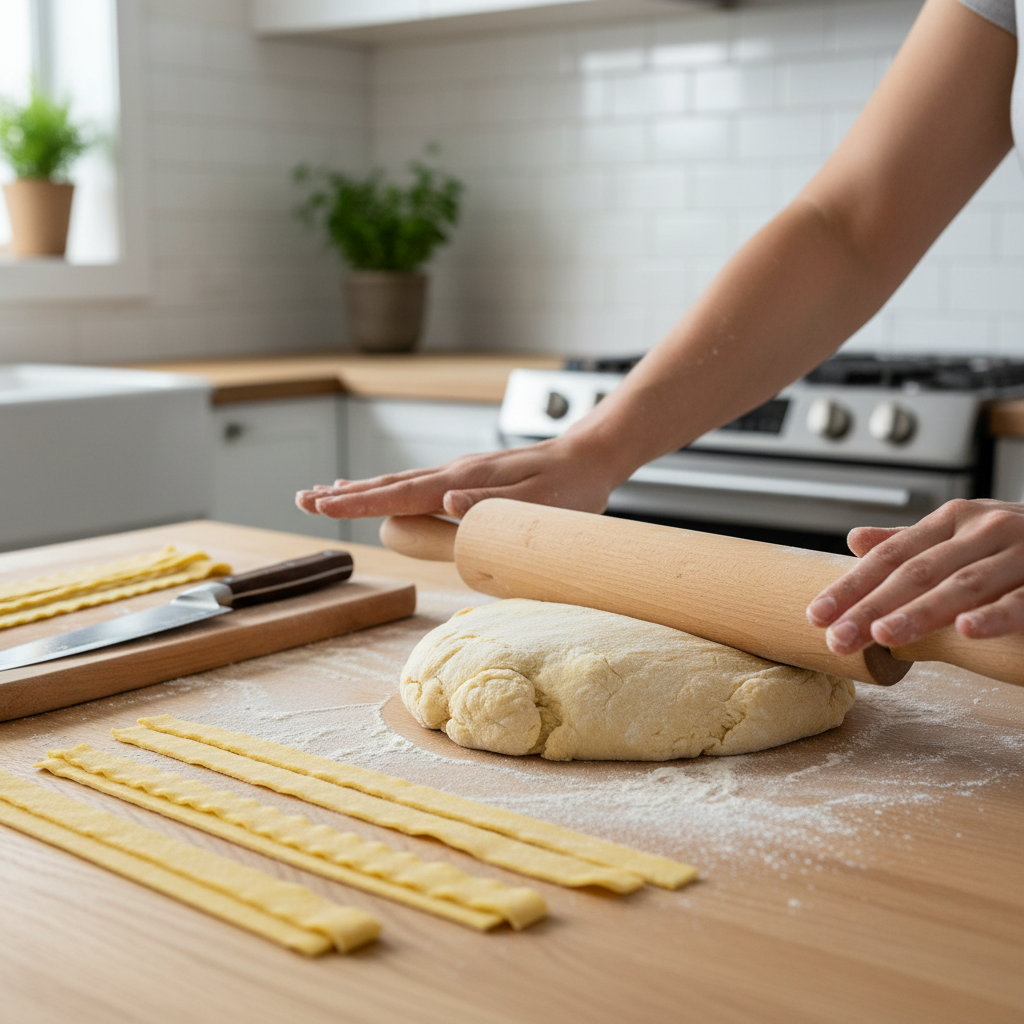
By hand, work in small portions, keep the rest covered. Roll from center outward, rotate, dust lightly as needed. With a machine, flatten to feed, then pass through progressively thinner settings.
5) Cut and dust
Lightly flour the sheet, fold loosely like an accordion, then slice with a sharp knife. Toss strands with a bit of flour or starch and spread out. Avoid packing them in a tight mound.
Thickness guide: match noodles to the dish (with a simple table)
This is where many batches go sideways. Too thin and you get limp noodles in a hearty sauce, too thick and the center stays doughy.
| Dish goal | Recommended thickness | Cut style | Typical boil time |
|---|---|---|---|
| Chicken noodle soup, light broths | Medium-thin (about 1.5 mm) | Short strips | 2–4 min |
| Butter and herbs, simple sauces | Thin (about 1.0 mm) | Tagliatelle-style ribbons | 2–3 min |
| Hearty ragù, creamy sauces | Medium (about 1.8–2.0 mm) | Wide ribbons | 3–5 min |
| Chewy stir-fry noodles | Medium-thick (2.0–2.5 mm) | Long strands | 3–6 min |
Boil times vary by flour, thickness, and how long noodles sit before cooking. Taste early, fresh noodles move from underdone to overdone quickly.
Cooking, storing, and freezing without clumps
Fresh noodles cook fast, so the pot should be ready before you start cutting, especially on busy weeknights.
Cooking tips that actually help
- Use a large pot with plenty of water so strands move freely
- Salt the water until it tastes pleasantly salty
- Stir in the first 30 seconds, that is when sticking happens
- Start tasting at 2 minutes for thin noodles, 3 minutes for thicker cuts
Short storage (fridge)
- Dust noodles well, portion into loose nests, store in an airtight container
- Refrigerate up to 24–48 hours in many home kitchens, but smell and texture should guide you
Freezing
- Freeze nests on a sheet pan until firm, then bag them
- Cook from frozen, add 30–90 seconds as needed
According to USDA Food Safety and Inspection Service (USDA FSIS), refrigerated foods should not sit out longer than 2 hours in the “danger zone,” and less time in very warm rooms, so if you are using egg dough, keep the workflow moving.
Common mistakes (and the fixes you will actually use)
- Adding lots of flour while kneading: you get a dry dough that cracks, add flour only to stop true sticking, not tackiness
- Skipping rest because you are hungry: the dough feels impossible, cover it, set a timer for 20 minutes, then try again
- Rolling a huge sheet: it dries out, roll smaller portions and keep the rest wrapped
- Over-dusting right before cooking: too much loose flour can cloud the water and gum the surface, shake off excess
- Overcooking: pull noodles when they still have a slight bite, they continue softening in hot sauce
Key takeaways and a simple plan for your next batch
If you want a reliable result, commit to one dough formula, weigh ingredients if possible, and give the dough its rest. Those three decisions do more than any gadget.
- Choose egg dough for easy rolling, water dough for extra chew
- Rest 20–40 minutes so rolling feels calm instead of stubborn
- Match thickness to dish, then taste early while boiling
Tonight, aim for one small batch, cook half right away, freeze the rest in nests. That is usually the fastest way to turn “I tried once” into a habit.
FAQ
- How do I make fresh noodles without a pasta machine?
Roll in smaller portions, keep the dough covered, and aim for an even thickness rather than chasing ultra-thin sheets. A sharp knife does the cutting just fine. - Why is my dough springing back when I roll it?
Gluten is tight, which often means it needs more resting time. Cover it and wait 15–20 minutes, then roll again, it usually relaxes. - Can I use all-purpose flour for everything?
Yes, in many home kitchens it works well. If you want more chew, consider bread flour, but you may need a bit more water and a longer rest. - How do I keep noodles from sticking together after cutting?
Dust lightly, toss to coat, then spread strands out or form loose nests. Clumping usually happens when noodles stay piled while still damp. - Do fresh noodles need eggs to taste “authentic”?
Not necessarily. Many styles use only flour and water. Eggs add richness and color, water dough can give a cleaner chew, pick based on the dish. - How long should I boil fresh noodles?
Most thin cuts finish in 2–3 minutes, thicker ones in 3–6 minutes. Taste early, because the window between tender and overdone can be short. - Is it safe to refrigerate egg noodle dough overnight?
Often it can be, but results vary by fridge temperature and handling. If you do it, wrap tightly, refrigerate promptly, and use common-sense food safety, when in doubt, discard and consider asking a food safety professional.
If you are making fresh noodles often and want fewer variables, a small kitchen scale and a basic pasta roller can make the process calmer and more consistent, especially when you cook for family or batch-freeze for busy weeks.