
lemon garlic chicken is one of those weeknight answers that tastes like you tried harder than you did: bright citrus, savory garlic, and a pan sauce you can spoon over anything. If your usual baked chicken turns out bland or dry, this version is built to avoid both.
The real trick is balance, lemon can go bitter if it scorches, garlic can burn, and chicken can overcook fast depending on the cut. Once you know what to watch, this becomes a reliable “I can make this without thinking” recipe.
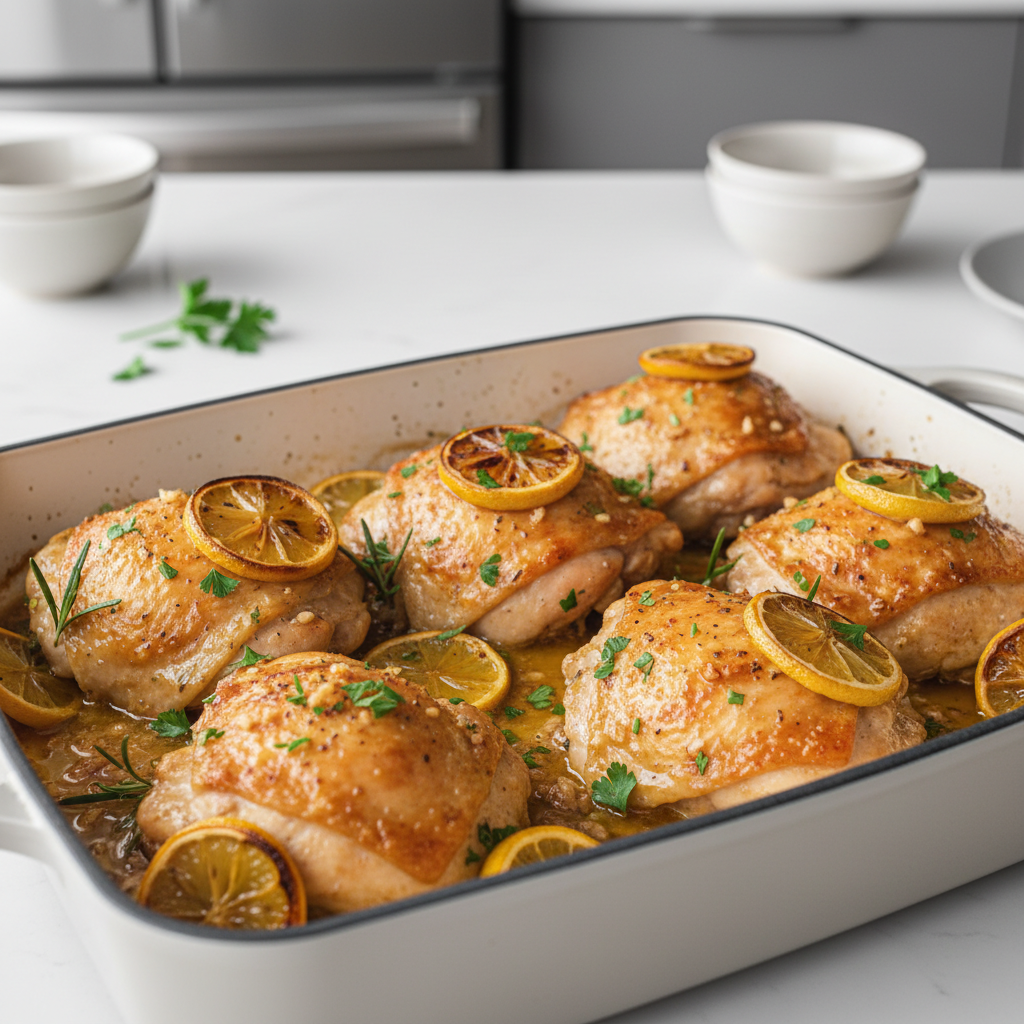
Below you’ll get a clear ingredient list, a baked method that works for breasts or thighs, and small adjustments that matter, like when to add lemon and how to tell doneness without guessing. I’ll also include a quick timing table, plus troubleshooting for common “why did mine turn out like this?” moments.
What makes this baked version work (and where people mess it up)
Most “easy lemon garlic chicken” recipes fail in two predictable places: the chicken dries out, or the lemon flavor turns sharp and flat. Baking can be gentle, but only if you manage moisture and heat.
- Acid timing matters: lemon juice can tighten proteins and make the surface seem dry if it sits too long, and it can taste harsh if it reduces too aggressively.
- Garlic is easy to burn: minced garlic on a hot pan surface goes bitter fast, especially near the edges of a baking dish.
- Cut choice changes everything: thighs forgive overbaking, breasts don’t. Bone-in pieces cook slower but stay juicier.
- People under-season: lemon “reads” as flavor, so many cooks go light on salt, then the dish tastes thin.
According to USDA Food Safety and Inspection Service (FSIS), poultry should reach a safe internal temperature of 165°F. In practice, getting there without overshooting is the whole game, a thermometer helps more than any trick.
Ingredients and smart substitutions
This is a short list on purpose. You’re building a lemon-garlic pan sauce, not a complicated marinade with ten competing flavors.
Core ingredients
- Chicken: 2 lb bone-in, skin-on thighs (or breasts, see timing table below)
- Lemons: 1–2 (zest + juice + a few slices)
- Garlic: 4–6 cloves, grated or thinly sliced
- Olive oil: 2–3 tbsp
- Chicken broth: 1/3 cup (or dry white wine, if you like)
- Butter: 1–2 tbsp (optional, but it rounds the sauce)
- Seasoning: kosher salt, black pepper
- Herbs: oregano or thyme, plus parsley for finishing
Substitutions that usually hold up
- If you’re out of broth, water works, but the sauce tastes lighter, add a bit more salt and herbs.
- If you prefer no butter, use a touch more olive oil, the sauce won’t look as glossy but still tastes good.
- If you only have bottled lemon juice, it’s fine in a pinch, but add fresh zest if possible for that clean aroma.
How to bake lemon garlic chicken (step-by-step)
This method assumes a 425°F oven for good browning. If your oven runs hot or you’re using breasts, you may prefer 400°F and a bit more time.
1) Heat and prep the pan. Preheat oven to 425°F. Use a rimmed sheet pan or a 9x13 baking dish. Pat chicken dry, this is what helps browning.
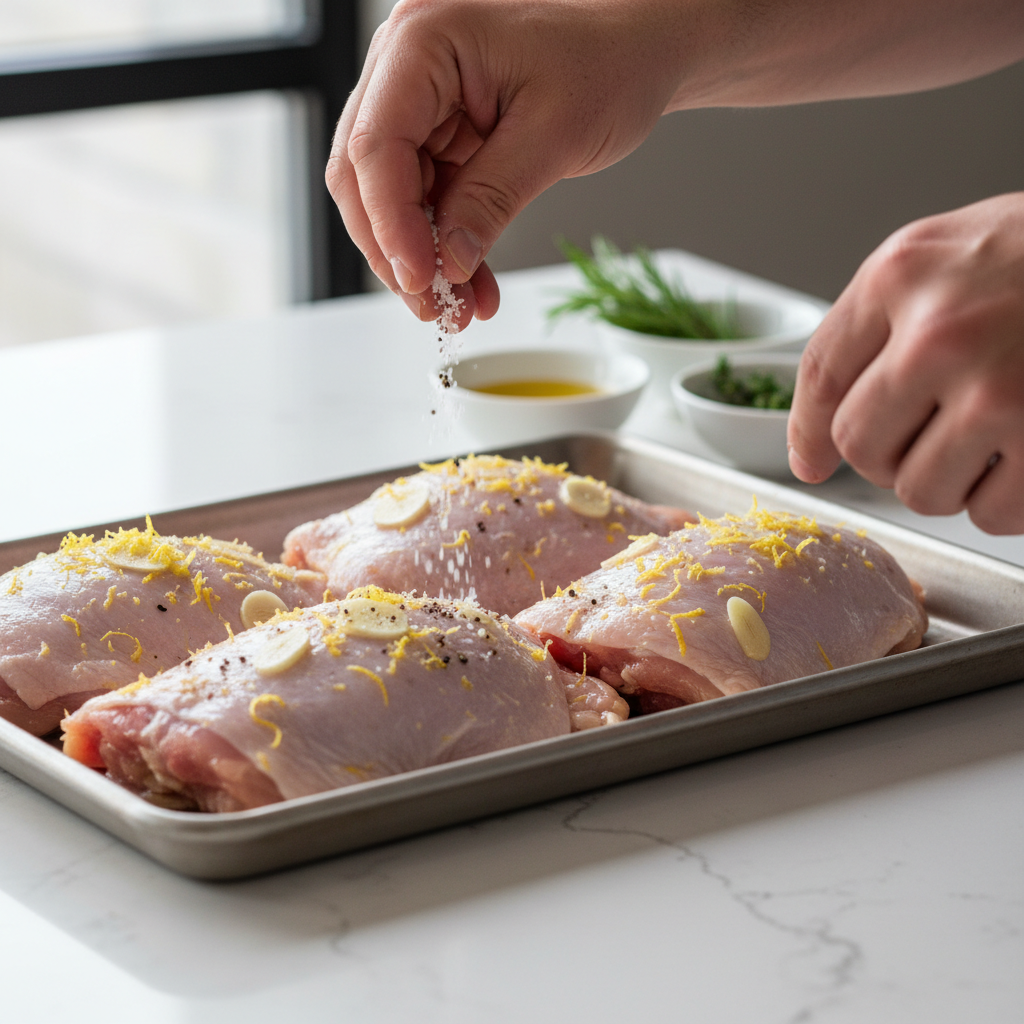
2) Build the flavor base. In a small bowl, mix olive oil, lemon zest, half the lemon juice, garlic, 1 tsp dried oregano (or 1 tbsp fresh thyme), 1 to 1 1/2 tsp kosher salt, and pepper.
3) Coat and arrange. Rub mixture over chicken. Place skin-side up with space between pieces. Tuck a few lemon slices around the chicken, not underneath where they can stick and burn.
4) Add liquid for a sauce. Pour broth into the pan around the chicken. You want moisture for sauce, but not so much that the chicken “boils.”
5) Bake, then check temperature. Bake until the thickest part hits 165°F. For thighs, you can go a little higher (170–175°F) for more tender texture.
6) Finish the sauce. Rest chicken 5–10 minutes. Stir butter into the hot pan juices if using, then add the remaining lemon juice a little at a time, tasting as you go. This is where the dish becomes bright without turning sour.
Bake times and temps by cut (quick table)
These are typical ranges, but pans, ovens, and chicken size vary. If you cook chicken often, a thermometer quickly pays for itself.
| Chicken cut | Oven temp | Approx bake time | Notes |
|---|---|---|---|
| Bone-in, skin-on thighs | 425°F | 30–40 min | Best for crisp skin and forgiving texture |
| Boneless, skinless thighs | 425°F | 20–28 min | Watch closely, they finish fast |
| Boneless, skinless breasts | 400–425°F | 18–28 min | Pull right at 165°F to avoid dryness |
| Bone-in breasts | 400°F | 35–50 min | More even cooking, stays juicier |
Quick self-check: what result are you aiming for?
If you know what you care about most, you’ll make better decisions mid-cook instead of blindly following a timer.
- You want crisp skin: choose skin-on thighs, pat dry, bake at 425°F, don’t crowd the pan.
- You want maximum juiciness: use bone-in cuts, and rest before slicing.
- You want extra lemon punch: add more zest, and add juice at the end rather than baking all of it.
- You want a lot of sauce: increase broth to 1/2 cup and whisk in butter after baking.
- You want a “set it and forget it” dinner: add baby potatoes or green beans to the pan, but keep space for airflow.
Practical add-ons: sides, meal prep, and leftovers
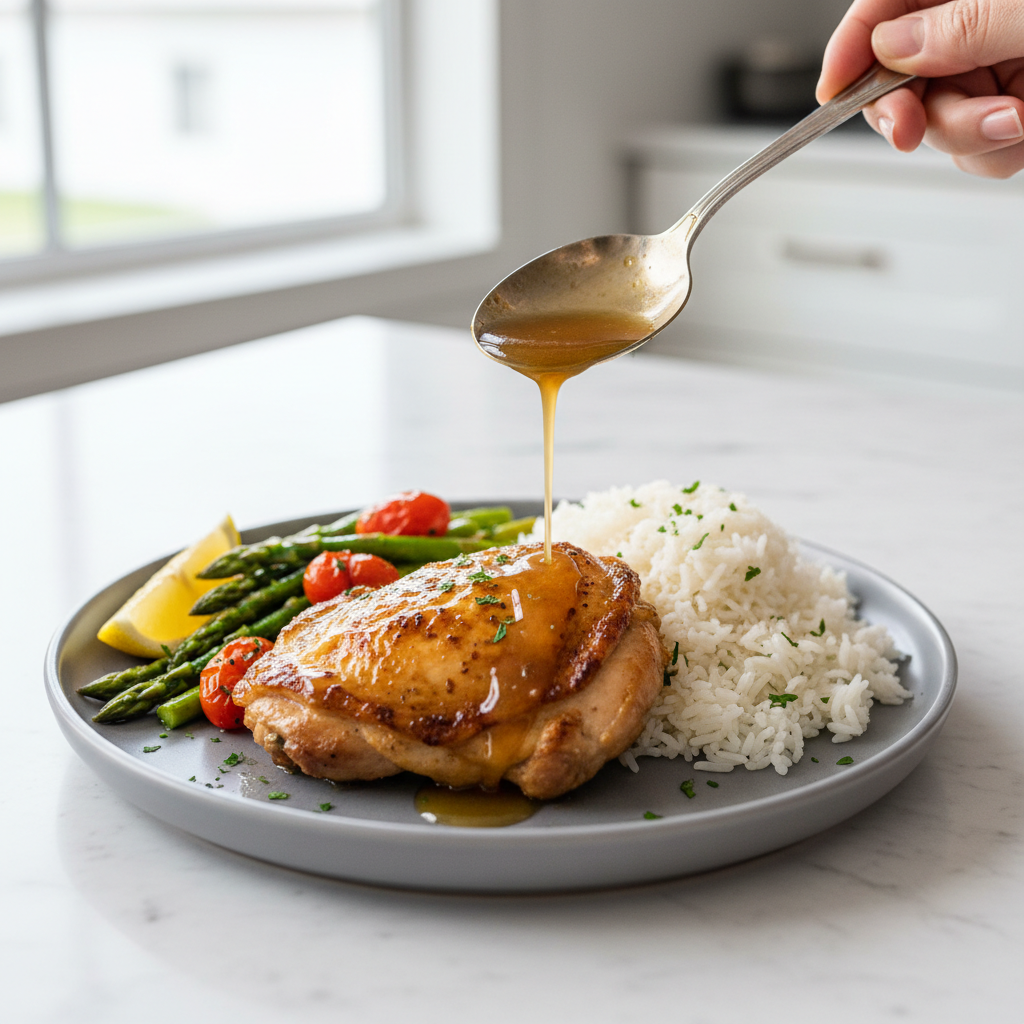
This baked lemon garlic chicken plays well with simple sides because the sauce already does a lot. I’d pick one starchy thing and one green thing, then stop.
Easy sides that make sense
- Roasted potatoes or baby potatoes (same pan if you cut small)
- Rice, orzo, or couscous to catch the sauce
- Broccolini, asparagus, green beans, or a simple arugula salad
Meal prep notes
- Marinating: 20–60 minutes usually helps. If you go much longer with lots of lemon juice, the texture can turn a bit “cured,” especially with smaller pieces.
- Storage: refrigerate leftovers promptly and use within a few days. Reheat gently so the chicken stays tender.
- Reheat tip: warm in a 300°F oven with a splash of broth, or microwave at lower power, then add fresh lemon at the end.
Common mistakes (and quick fixes)
Most issues are fixable, even after baking, as long as you’re honest about what went wrong.
- Chicken tastes bland: add a pinch of salt to the pan sauce, then spoon it over sliced chicken. Lemon flavor often hides under-seasoning.
- Sauce tastes bitter: remove over-browned lemon slices, then stir in a little broth and a small knob of butter to soften the edge.
- Garlic tastes sharp: next time slice instead of mince, or stir some garlic in after baking while the pan is still hot.
- Breasts turned dry: slice thin and serve with extra sauce, or shred and toss with the juices for sandwiches.
- Skin not crisp: you likely crowded the pan or started with wet skin. A short broil can help, but watch closely.
Key takeaways before you cook
- Use zest for aroma, juice for brightness, and add part of the juice at the end so it tastes fresh.
- Don’t guess doneness, check temperature and pull at 165°F for breasts.
- Leave space on the pan, it’s the difference between roasting and steaming.
- Rest before cutting, the juices settle and the texture improves.
Conclusion: a reliable baked dinner you can repeat
If you’ve been chasing a lemon-forward chicken that still stays juicy, this baked approach is a solid baseline, and it’s flexible enough to fit whatever cut you have in the fridge. Start with thighs if you want the least fussy route, then switch to breasts once you’re comfortable reading temperature and timing.
Pick your cut, follow the table, and do one small “pro move” tonight: save some lemon juice for the end, taste the sauce, and adjust. That’s usually the difference between “fine” and “make it again.”
FAQ
Can I make lemon garlic chicken with boneless skinless breasts without drying them out?
Yes, but treat timing as the main ingredient. Bake until 165°F, rest before slicing, and lean on the pan sauce for moisture. Many ovens overcook breasts in a couple minutes, so start checking early.
Should I marinate lemon garlic chicken overnight?
Many times it’s better not to, especially if the marinade includes a lot of lemon juice. A shorter marination (20–60 minutes) usually gives plenty of flavor without changing texture too much.
Why did my sauce turn bitter?
It often comes from scorched lemon slices or browned minced garlic. Add lemon juice after baking, and keep garlic protected in the oil mixture rather than exposed on dry pan edges.
Can I use chicken tenderloins for this recipe?
You can, but they cook fast and dry easily. Bake at a slightly lower temp (around 400°F), start checking early, and consider adding the garlic later so it doesn’t overbrown while the chicken finishes.
What herbs taste best with lemon and garlic?
Oregano, thyme, and parsley are the usual winners because they don’t fight the citrus. Rosemary can be great too, but it’s strong, use it lightly.
How do I know when thighs are “done” if they’re still a little pink near the bone?
Color can be misleading. Go by internal temperature at the thickest part. If it’s at least 165°F, it’s safe; many cooks prefer thighs closer to 170–175°F for a more tender bite.
Is this lemon garlic chicken recipe safe for someone watching sodium?
It can be, but it depends on broth and seasoning. Choose low-sodium broth and season gradually, tasting the sauce at the end. If sodium is a medical concern, it’s smart to check with a qualified professional.
If you’re trying to build a small set of go-to baked dinners, keep this one in rotation and tweak it week by week, more zest, different herbs, extra vegetables on the pan, until it fits your kitchen rhythm without extra stress.