
Thai coconut soup is one of those dishes that sounds intimidating until you realize it’s mostly about balance, not fancy technique. If your past attempts tasted bland, overly sweet, or like straight coconut milk, this version focuses on the small moves that create that classic Tom Kha Gai flavor in a home kitchen.
You’ll get a practical ingredient guide, a clear step-by-step method, and a few realistic substitutions for U.S. grocery stores. I’ll also point out where people usually go wrong, because most “meh” bowls come from the same two or three missteps.
One quick note on safety and diet needs: if you’re adjusting sodium, sugar, or allergens, it’s usually best to tailor ingredients to your needs and, if necessary, check with a qualified professional.
What Tom Kha Gai should taste like (so you can self-correct)
Before cooking, it helps to know what you’re aiming for. A good bowl tastes creamy but not heavy, aromatic from galangal and lemongrass, gently spicy, and finished with a clean sour edge from lime.
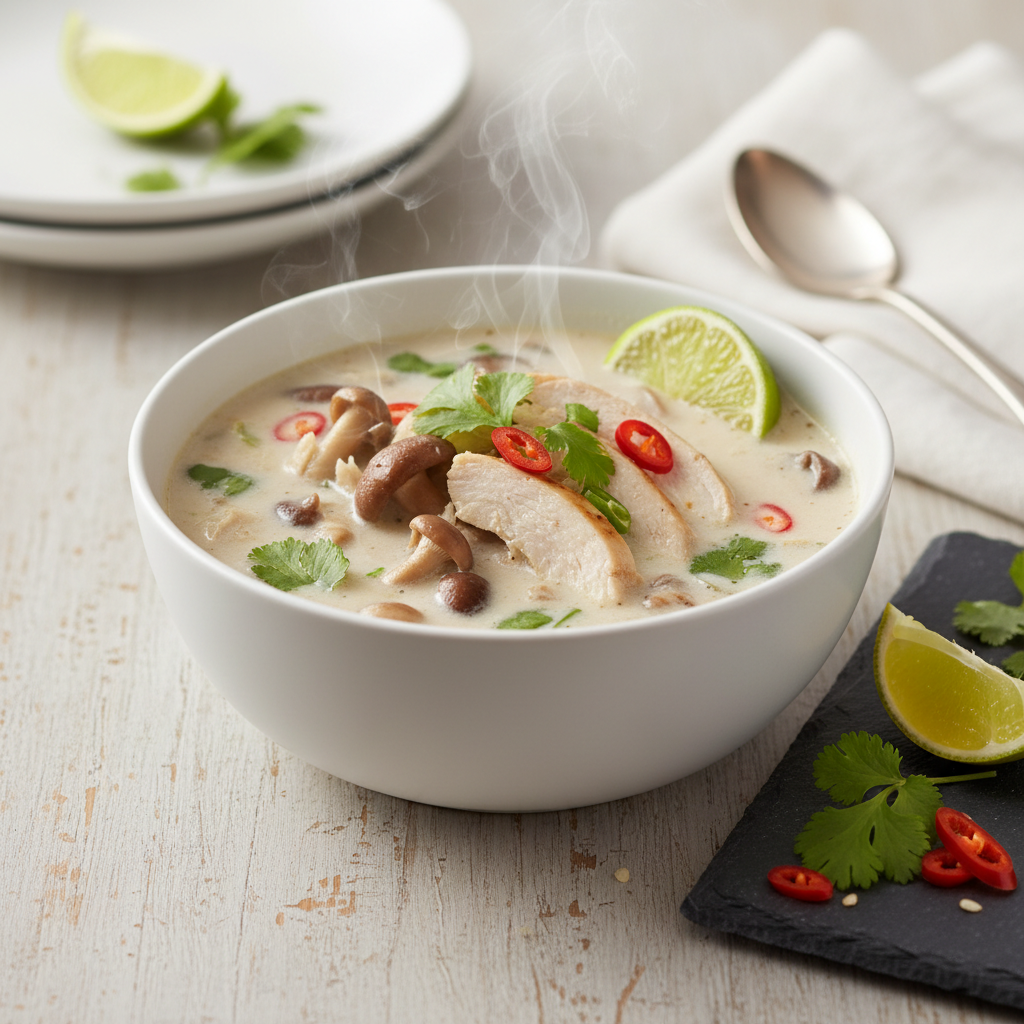
If it tastes “coconutty” in a dessert way, you probably need more acid and salt. If it tastes sharp and thin, you may be underusing coconut milk or overcooking the aromatics until they turn bitter.
Key idea: you don’t dump lime juice in early and hope for the best. You build the broth, then adjust at the end so the sour note stays bright.
Ingredients you need (and the best U.S. grocery substitutions)
Traditional Tom Kha Gai uses a few Thai aromatics that can be tricky to find. If you can get them, use them. If not, you can still make a great weeknight soup with smart swaps.
Core ingredients
- Coconut milk: full-fat for body (light works but tastes thinner)
- Chicken: thighs stay tender, breasts work if you don’t boil hard
- Mushrooms: straw mushrooms are classic, but cremini works well
- Fish sauce: main salty backbone
- Lime juice: added at the end
- Chiles: Thai bird chiles, serrano, or a spoon of chili paste
Aromatics (choose the best you can find)
- Galangal: ideal; if unavailable, ginger is acceptable but different
- Lemongrass: fresh stalks are best; lemongrass paste can work in a pinch
- Kaffir lime leaves: great if you find them; otherwise add extra lime zest (lightly)
Optional, but common
- Thai chili paste (nam prik pao) for color and deeper flavor
- Brown sugar or palm sugar (small amount)
- Cilantro for serving
Quick checklist: what you have determines the method
Most people get frustrated because they follow a recipe that assumes access to a Thai market. Use this to decide how “authentic” your base can be today.
- You have galangal + lime leaves + lemongrass: go light on extra seasoning, let aromatics do the work
- You have only lemongrass (or paste): add a touch of lime zest and be careful with ginger so it doesn’t dominate
- You have none of them: you can still make a tasty coconut chicken soup, but call it Tom Kha-inspired and lean on lime, fish sauce, and chili paste for identity
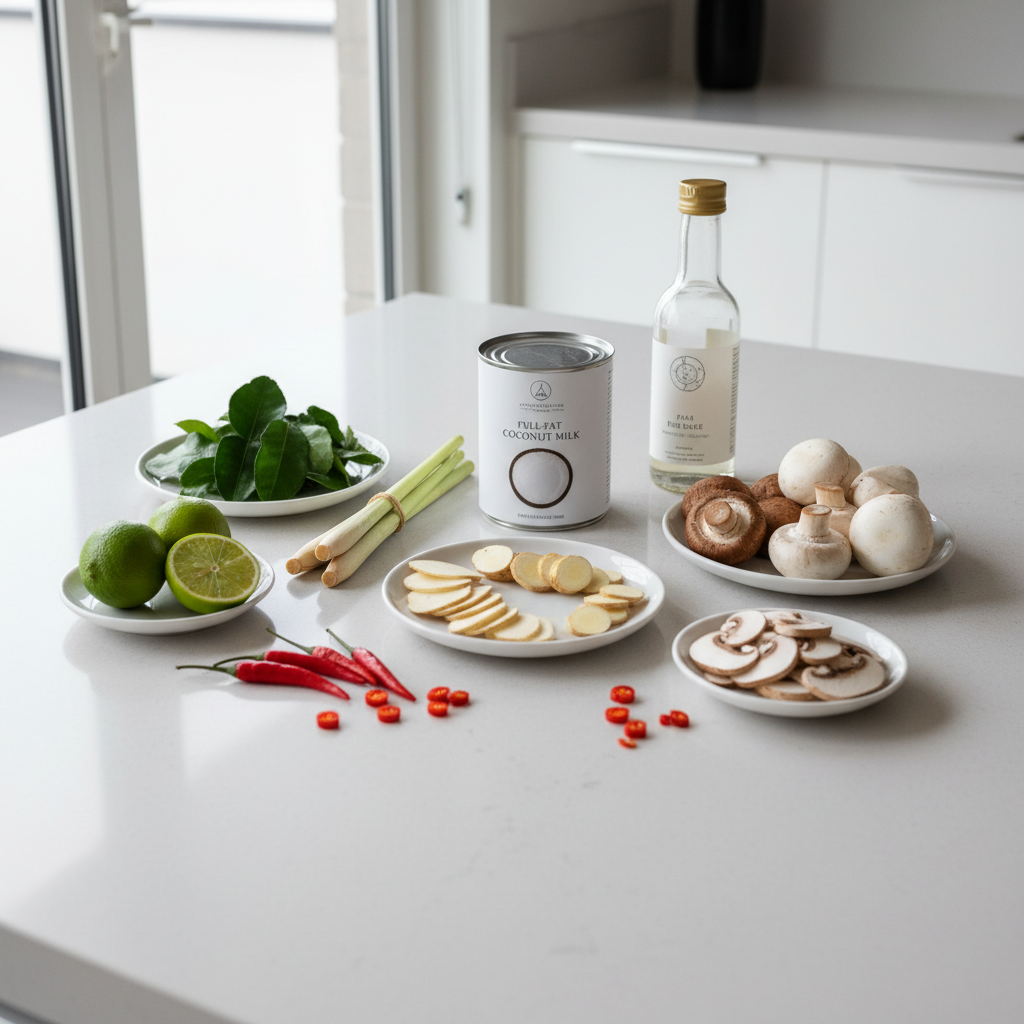
None of these options is “wrong,” but the finishing adjustments change depending on what you start with, especially for acidity and salt.
Thai Coconut Soup (Tom Kha Gai) recipe: step-by-step
This method keeps the broth aromatic and the chicken tender. It also makes it easier to fix the flavor at the end, which is where a lot of home cooks win or lose the bowl.
Ingredients (about 4 servings)
- 1 tbsp neutral oil (optional)
- 3 cups chicken stock (low-sodium helps you control salt)
- 1 can (13.5 oz) full-fat coconut milk
- 1 stalk lemongrass, smashed and cut into 2–3 inch pieces (or 1–2 tbsp lemongrass paste)
- 6–10 thin slices galangal (or 4–6 slices ginger)
- 4–6 kaffir lime leaves, torn (optional)
- 10–12 oz mushrooms, sliced
- 12–14 oz chicken thighs or breast, thinly sliced
- 2–3 tbsp fish sauce, to taste
- 1–2 tsp sugar, optional, to balance
- 1–3 Thai chiles or 1 serrano, sliced (or chili paste to taste)
- 2–3 tbsp fresh lime juice, to taste
- Cilantro for serving
Method
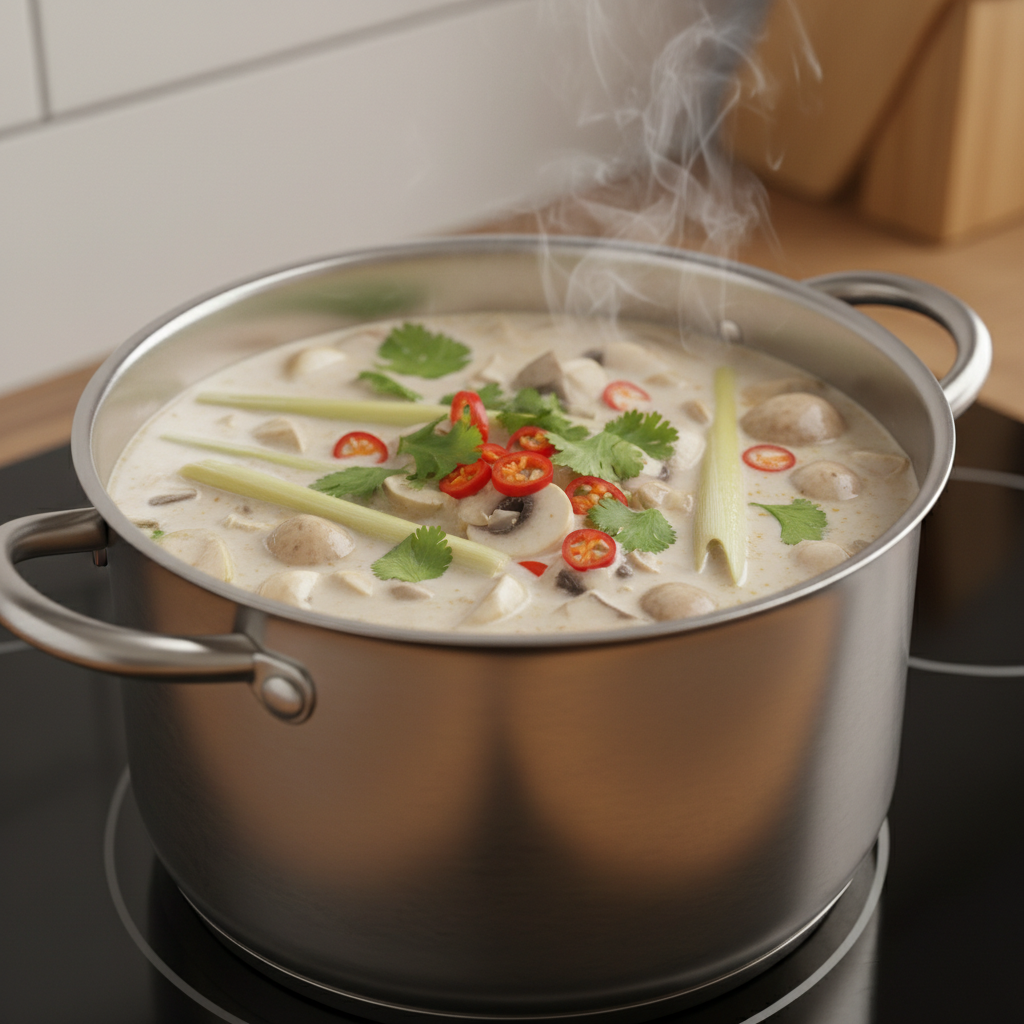
- Warm the aromatics: In a pot, bring stock to a gentle simmer. Add lemongrass, galangal, and lime leaves. Simmer 8–10 minutes. Keep it gentle, you want fragrance, not bitterness.
- Add coconut milk: Pour in coconut milk and return to a low simmer. Avoid a hard boil, which can dull aroma and toughen chicken.
- Cook mushrooms: Add mushrooms and simmer 3–5 minutes until they soften.
- Poach chicken: Add sliced chicken and cook at a gentle simmer until just done, often 3–6 minutes depending on thickness.
- Season: Stir in fish sauce, sugar if using, and chiles. Taste the broth before adding lime so you understand your base.
- Finish with lime: Turn heat low or off, stir in lime juice, then taste again. Add more lime or fish sauce in small increments.
Serve hot with cilantro. Many people also like it with steamed jasmine rice, especially if you made the soup spicier.
Flavor balancing guide (the part most recipes skip)
Tom Kha Gai is basically a balancing act between salty (fish sauce), sour (lime), sweet (sugar or chili paste), heat (chiles), and richness (coconut milk). If one note is off, the whole thing feels wrong.
| Symptom | What it usually means | Fix (small steps) |
|---|---|---|
| Tastes flat | Not enough salt or acid | Add fish sauce 1 tsp at a time, then lime 1 tsp at a time |
| Tastes “too coconut” | Acid too low, aromatics too weak | Add lime, a touch more fish sauce, and a bit of chili paste if you have it |
| Tastes sharp/harsh | Too much lime or not enough richness | Add a splash more coconut milk, or a pinch of sugar |
| Chicken feels dry | Boiled too hard or cooked too long | Keep a gentle simmer, slice thinner next time, add chicken later |
Key takeaway: adjust salt first, then sour, then sweet. If you do sour first, you’ll often chase the flavor in circles.
Common mistakes (and how to avoid them)
- Boiling the soup hard: coconut milk can separate and aromatics can turn rough. Keep it at a quiet simmer.
- Adding lime juice early: the bright note fades and can taste slightly “cooked.” Add at the end.
- Overdoing ginger as a galangal swap: ginger reads warm and spicy, galangal reads piney and citrusy. Use less ginger than you think.
- Not tasting in phases: taste after coconut milk, then after fish sauce, then after lime. That’s how you learn control fast.
According to USDA, poultry should reach a safe internal temperature of 165°F. If you’re unsure, a quick-check thermometer removes the guesswork, especially when you’re trying to avoid overcooking.
Practical serving, storage, and meal-prep tips
This soup is best the day you make it, but it still holds up well for leftovers if you store it thoughtfully.
- Serving: pull out lemongrass, galangal, and lime leaves if you prefer a cleaner bowl, they’re typically not eaten.
- Make-ahead: simmer aromatics in stock in advance, refrigerate, then reheat and add coconut milk, mushrooms, and chicken closer to serving.
- Storage: refrigerate in a sealed container and eat within 3–4 days in many home kitchens. Reheat gently, avoid boiling.
- Freezing: possible, but coconut soups can change texture. If freezing matters, freeze the aromatic stock base and add coconut milk later.
Conclusion: a reliable Tom Kha Gai routine you can repeat
When thai coconut soup comes out right, it’s usually because you respected the simmer, kept the chicken tender, and finished with lime at the very end. Once you get that rhythm, you can swap proteins, adjust heat, and still land in the same comforting, bright place.
If you cook this week, do two things: keep the broth at a gentle simmer, then taste and adjust in small steps right before serving. That’s the difference between “pretty good” and the bowl you actually crave.
FAQ
How do I make thai coconut soup less spicy but still flavorful?
Skip fresh chiles and use a small amount of chili paste for background warmth, then lean on lime and fish sauce for lift. You can also serve sliced chiles on the side so everyone adjusts their own bowl.
Can I use ginger instead of galangal in Tom Kha Gai?
Yes, it’s common in the U.S., but use a lighter hand because ginger can dominate. If you have lime zest or lime leaves, they help replace some of galangal’s citrusy aroma.
What’s the best coconut milk for Tom Kha Gai?
Full-fat coconut milk usually gives the right body. If you only have light coconut milk, you may want a bit more coconut milk and a slightly stronger finish with lime to keep it lively.
Is fish sauce required, or is there a substitute?
Fish sauce gives a specific savory depth. If you avoid it, you can try soy sauce or coconut aminos, but expect a different profile; you may need extra lime and aromatics to keep the soup from tasting “flat.”
Why did my coconut milk separate in the soup?
A hard boil is the usual reason. Keep the pot at a gentle simmer and reheat leftovers slowly. Some brands also separate more easily, so the same method can behave differently by product.
Can I make this thai coconut soup with shrimp or tofu?
Yes. Shrimp cooks fast, so add it at the end. For tofu, use firm tofu and warm it gently in the broth so it doesn’t break apart, then adjust seasoning right before serving.
How can I tell when the chicken is done without drying it out?
Thin slices cook quickly at a gentle simmer. If you want certainty, use a thermometer and aim for 165°F, then take the pot off heat and let carryover finish the last bit.
If you’re trying to get a consistent Tom Kha Gai result in a U.S. kitchen, it often helps to set up a “finish station” with lime, fish sauce, and chili paste so you can tweak the bowl in real time, rather than hoping the pot magically balances itself.